
Issuing e-invoices (ESF) from 1C in Kazakhstan: deadlines, sending options and automation
What an ESF and IS ESF are, who must issue a VAT invoice in Kazakhstan and by when under the 2026 Tax Code, how to send ESF from 1C and when a website integration helps.

In Kazakhstan a VAT invoice (schet-faktura) is not a PDF you email: it is an electronic record in a state information system called IS ESF, run by the State Revenue Committee. ESF stands for "electronic invoice". For a foreign company with a local entity, three questions come up immediately: who has to issue ESF, by when, and how to send them from 1C, the accounting software most Kazakh bookkeepers use. A fourth follows quickly: what if orders come from a website, the Kaspi Marketplace or a CRM rather than from 1C? This article answers all four under the Tax Code in force since 1 January 2026.
A caveat up front: we are developers, not accountants. Our job is to make ESF come out of the right system without manual re-entry. Your tax regime and the cases in which you must issue an invoice are your accountant's call.
What ESF and IS ESF are
An invoice is issued electronically in the electronic invoice information system, IS ESF (Art. 492(1) and Art. 209(1) of the Tax Code of Kazakhstan). Paper is allowed only in exceptions: no telecom connection at the taxpayer's location, technical errors in IS ESF confirmed on the authority's website, a suspension of invoicing, or a state of emergency. A paper invoice is later entered into IS ESF anyway, as a rule within fifteen calendar days after the errors are fixed.
To log in and sign documents you need digital signature (EDS) keys issued by the National Certification Authority of Kazakhstan. For accounting systems, IS ESF offers an API and a developer kit (SDK) published on the State Revenue Committee's website. This API is what 1C and other programs use to send ESF without the web portal.
Who must issue ESF
Under Article 207 of the Code, invoices are issued by:
- VAT payers, on any sale of goods, work or services (Art. 491(1));
- non-VAT payers in the cases listed in Article 208, including sellers on the simplified declaration regime (subpara. 7), sellers of imported goods (subpara. 9) and sellers of goods recorded in the "Virtual Warehouse" module (subpara. 10).
An invoice is not required, among other cases, when the buyer received a cash register receipt, or when goods are sold to an individual who paid with electronic money or an electronic payment instrument (Art. 491(2)). However, the buyer may demand an invoice within fifteen calendar days, and the seller must then issue one (Art. 491(4)). Our guide to ESF for online sales covers websites and Kaspi in detail.
ESF deadlines
The core rule is in Article 493: an invoice is issued no earlier than the date of the sale (the turnover date) and no later than fifteen calendar days after it (para. 1). Special deadlines:
| Case | Deadline |
|---|---|
| Ordinary sale of goods, work or services | No earlier than the turnover date and no later than 15 calendar days after it |
| Utilities, telecoms, energy, water, gas and other cases in para. 2 | For the month, no later than the 20th of the following month |
| Export under the customs export procedure | No later than 20 calendar days after the turnover date |
| ESF issued at the buyer's request (Art. 491(4)) | No later than 30 calendar days after the turnover date |
Made a mistake in an issued ESF? You issue a corrected invoice, which cancels the previous one (Art. 499). That is why your accounting system should keep the link between the order, the shipment and the ESF number; otherwise every correction turns into a search through portal lists.
How to send ESF from 1C
The Kazakhstan edition of 1C:Accounting 8 offers two ways to exchange data with IS ESF:
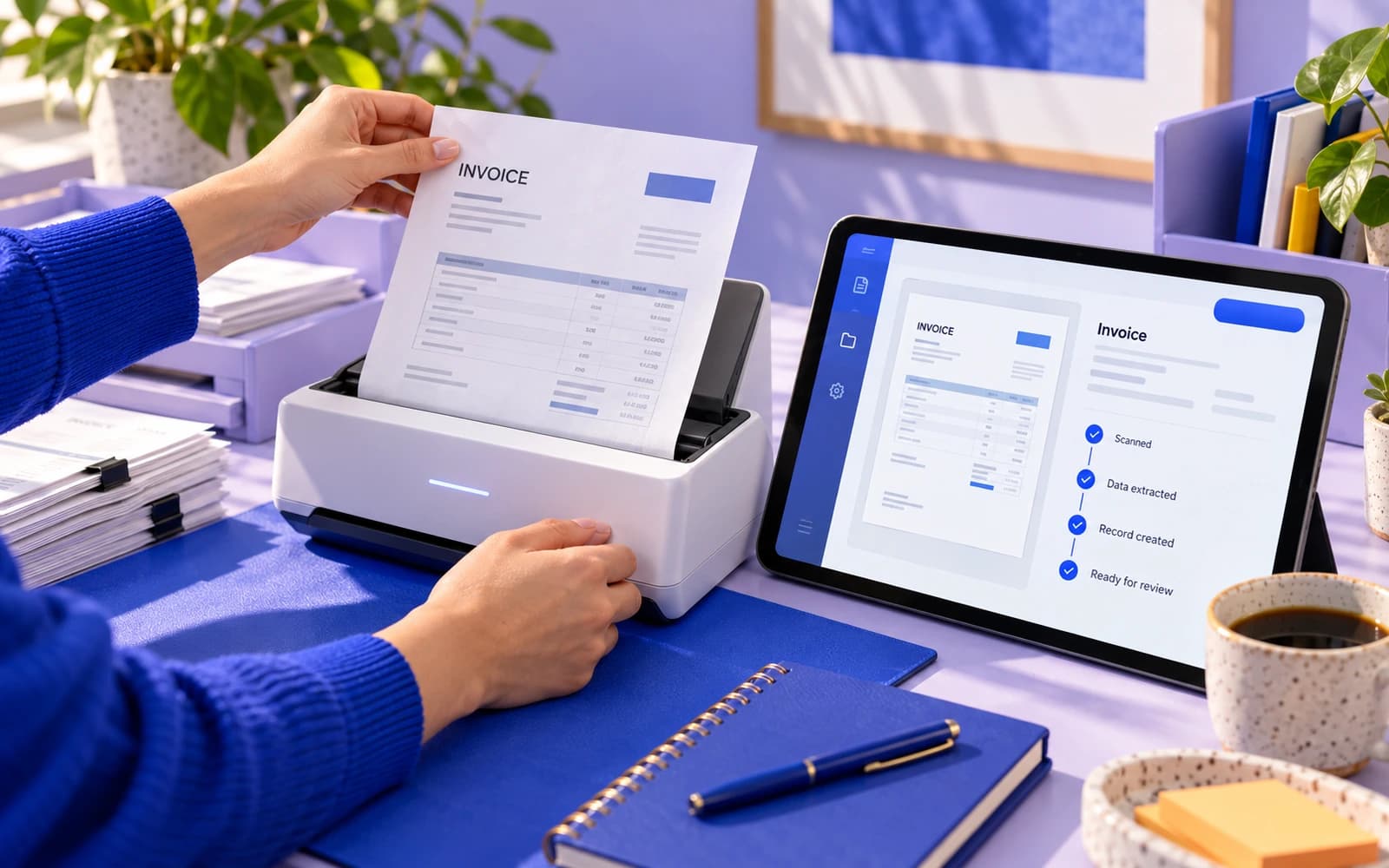
- Direct exchange through the API. 1C builds the ESF from the sales document, signs it with an EDS key, sends it to IS ESF and pulls the statuses back. This is the main route if you issue many invoices.
- XML export and import. 1C saves the ESF as a file and the accountant uploads it to the portal. It works as a fallback or for occasional documents.
What direct exchange needs: valid EDS keys for the company and the employee, the right permissions in IS ESF, an up-to-date 1C configuration and working 1C online support. Updates are not a formality, because the State Revenue Committee changes its API. In 2023, for example, the authentication method changed and accounting systems had to move to the GOST 2015 cryptographic standard; older versions stopped connecting. Step-by-step setup in your exact 1C edition is a job for your 1C specialist or 1C partner.
When ESF are not issued from 1C
Trouble starts when the sale originates outside 1C:
- Orders from your website and the Kaspi Marketplace. If they do not reach 1C automatically, the accountant copies them by hand, and ESF go out late or with wrong buyer details.
- Your own CRM or ERP. Shipments live in one program while ESF are issued in another. This is common for international groups running a global ERP.
- Several legal entities and warehouses. One order may be closed by different entities.
There are two ways out. The first is to bring all sales into 1C so ESF are issued where they are issued today. Your website and Kaspi pass orders to 1C, a business buyer enters its BIN (business ID number) in the order form, and documents and ESF come from one place. The second, if your books are not in 1C, is to connect your system to IS ESF directly through the State Revenue Committee API. Our page on IS ESF integration shows how that works. In both cases the rule is the same: ESF must have one place of issue, or you will get duplicates.
Common mistakes
- Wrong buyer details. Nobody checked the BIN from the order form, and the ESF went to the wrong company. A BIN field with format validation in the order form removes most of these errors.
- Missing the deadline. Goods ship at the start of the month, ESF are issued at the end after reconciliation. Fifteen calendar days pass quickly.
- Issuing twice. One ESF went out from 1C, a second one was entered by hand on the portal.
- Losing the link to the order. A month later nobody can say which shipment an ESF belongs to or whether it needs correcting.
- Expired EDS keys. Keys have a validity period. When it ends, the exchange stops on the least convenient day.
What you can automate
| Task | Where it is solved |
|---|---|
| Website and Kaspi orders into 1C | Linking your website and Kaspi to 1C |
| Buyer BIN and company name | A field in the order form or the CRM customer card |
| Issuing and sending ESF | 1C direct exchange with IS ESF, or your system via the State Revenue Committee API |
| ESF statuses on the order | Pulling statuses back from IS ESF |
| Deadline reminders | A report of "shipped, but no ESF yet" by date |
The first two rows are usually enough: once orders reach 1C on their own, issuing ESF in 1C becomes routine. We build links between 1C and websites, Kaspi and CRMs as a separate service; see 1C integration.
Where our work ends
We design and build the data exchange: website, Kaspi, CRM, 1C, IS ESF. A standard link between two systems starts from 270 000 ₸, the price is fixed in the contract, and the work carries a 6-month warranty. Which documents to issue, which tax regime you are on and how transactions are recorded is your accountant's decision: we configure the system to their rules, not the other way round.
This is a practical summary of the rules, not tax advice. The Code changes; the current version is on adilet.zan.kz.
What we do on this topic
Short and to the point.
What is an ESF?
An electronic VAT invoice issued in IS ESF, the State Revenue Committee’s information system. Under the Tax Code of Kazakhstan, invoices are issued electronically, and paper is allowed only in exceptions (Arts. 492 and 209).
By when must an ESF be issued?
As a rule, no earlier than the turnover date and no later than fifteen calendar days after it (Art. 493(1)). For utilities, telecoms and some other cases, for the month by the 20th of the next month; at a buyer’s request, no later than thirty days.
Can 1C send ESF automatically?
Yes. The Kazakhstan edition of 1C:Accounting 8 supports direct exchange with IS ESF through the API: 1C builds the ESF, signs it with an EDS key and sends it without the portal. You need valid keys, IS ESF permissions and an up-to-date configuration.
Is an ESF needed if the buyer got a cash register receipt?
As a rule, no (Art. 491(2)), but the buyer may demand an invoice within fifteen calendar days, and then it must be issued. Imported goods and Virtual Warehouse goods have their own rules; check with your accountant.
What does it cost to link a website or CRM to 1C and IS ESF?
A standard link between two systems starts from 270 000 ₸, for example a website and 1C, or your own accounting system and IS ESF. With more systems, we scope it first and fix the price in the contract.
Read also
 Websites9 min readHow to accept Kaspi Pay on your website in Kazakhstan: QR, invoices and payment linksAccepting Kaspi payments on a website in Kazakhstan: Kaspi Pay QR, invoices and links, the Payments on Kaspi.kz service, the Marketplace button, fees and receipts.
 Websites11 min readHow to accept payments online in Kazakhstan: cards, Kaspi, invoices and chatbotsOnline payments in Kazakhstan: links and invoices, Halyk ePay on your site, Kaspi, chatbot payments, online cash registers, 1C and CRM sync, mistakes and a launch plan.
 Automation10 min readBusiness process automation: what to automate first and how to count the payoffWhich processes to automate first, when CRM robots are enough and when you need a 1C and Kaspi integration, how to count the payoff and avoid common mistakes.
Shall we discuss your project?
We will tell you what it costs and how long it takes. The price is fixed in the contract.