
What a CRM is and how to choose one in Kazakhstan: amoCRM, Bitrix24, 1C or a custom system
What a CRM does for a company in Kazakhstan: leads from WhatsApp, the website and Kaspi in one place. How amoCRM, Bitrix24 and 1C CRM are priced and how to roll one out.

One lead lands in a sales rep's WhatsApp, a second customer writes on Instagram, a third leaves a phone number on the website, and a Kaspi order is waiting for confirmation in the seller dashboard. A week later nobody remembers who was promised a call back. And when a rep leaves, the customer history leaves with their phone. This is exactly the problem a CRM solves.
If you run a team in Kazakhstan, this guide explains in plain terms what a CRM system is, what it does for a local company, what the realistic options are (amoCRM, Bitrix24, a CRM on the 1C platform, or a custom system), how pricing works and what to check about where customer data is stored. Third-party prices change, so we link to the official pages instead of quoting figures from someone else's review.
What a CRM system is, in plain terms
A CRM (customer relationship management) system is the shared database of a company's customers and deals. Every customer has one record: contacts, messages, calls, orders, invoices, tasks and notes from the team. Every sale has a deal that moves through the stages of a pipeline: new lead, qualification, proposal, invoice, payment.
The main difference from an Excel sheet or a group chat is that a CRM tells you what to do next. A rep sees today's task list, a manager sees every open deal and the stage where it is stuck. A short definition of the term is in our glossary; here we focus on practice.
What a CRM does for a company in Kazakhstan
It collects leads from every channel in one place
If customers write on WhatsApp, Instagram and Telegram, fill in website forms and call, the first job of a CRM is to merge all of that into one stream. Every inquiry becomes a deal with an owner and does not get lost on someone's personal phone. For WhatsApp, the official WhatsApp Business API is more reliable than the app on a rep's phone: the conversation stays with the company even if the employee leaves.
It takes a deal all the way to payment
Pipeline stages, tasks, reminders, message and invoice templates. A rep does not have to remember whom to call after a site visit or whom to send a proposal: the system creates the task when a deal moves to the next stage. A manager sees where deals get stuck and with whom.
It connects sales with 1C accounting
If your books are kept in 1C, without a link the CRM quickly becomes a second place for manual entry: the invoice is issued in the CRM, the payment shows up in 1C, and someone reconciles the two in Excel. A link passes customers, invoices and payments between the systems, and the rep sees right in the deal whether the invoice is paid. How a 1C exchange works and what to sync is covered in our article on integrating 1C with a website, and the integration options are on the 1C for Kazakhstan page.
It takes in Kaspi orders
Sellers on the Kaspi.kz marketplace pull orders into their own systems through the seller API. The token for that integration is generated by the head of the company in the web version of the seller dashboard, under Settings, API token (Kaspi Guide). A Kaspi order then lands in the CRM next to leads from WhatsApp and the website, and the customer has a single purchase history. More on the Kaspi integration page.
Telephony and reports
Calls with recordings in the customer record, a missed call turned into a task, reports by lead source and by pipeline stage. A source report shows which channel brings buyers rather than just inquiries, and where the ad budget should go.
The options companies choose from in Kazakhstan
In practice there are four. Below is a short note on each; a detailed comparison of the two cloud CRMs and a custom system is in amoCRM, Bitrix24 or a custom CRM.
amoCRM
A CRM built for sales teams: pipeline, deals, customer conversations inside the deal record. The official amoCRM pricing page lists three plans (Basic, Advanced and Professional), with prices shown in tenge among other currencies. Plan limits, such as the number of contacts and open deals, are counted per user. Subscriptions start at six months, there is no monthly billing at the moment, and new accounts get a 14-day trial. How we set it up is on the amoCRM page.
Bitrix24
Not just a CRM but a workspace for the whole company: CRM, tasks and projects, a messenger, file storage, a contact center, websites. According to the prices on bitrix24.kz, a plan is paid for the whole company rather than per user. There is a free plan with no limit on users, and the paid plans are sized for 5 users (Basic), 50 (Standard), 100 (Professional) and 250 and more (Enterprise). Prices are listed in tenge excluding VAT, with a discount for annual payment. If the database has to live on your own server, there is an on-premise edition. More on the Bitrix24 page.
A CRM on the 1C platform
1C has its own CRM products for Kazakhstan: the catalog on 1c.kz lists 1C:Enterprise 8 CRM STANDARD for Kazakhstan, 1C:CRM PROF for Kazakhstan and 1C:CRM CORP for Kazakhstan, edition 3.0. This route makes sense when the company already runs on 1C and has its own 1C specialist. Show the system to your sales team before you buy: they are the ones who will work in it every day.
A custom CRM
A system built around your process: your stages, roles, fields, reports and any links to 1C, Kaspi, the e-invoicing system (IS ESF) and telephony. It is paid once under a contract, followed by hosting and support, and the code and data stay with the company. When it pays off and when it does not is covered in when an off-the-shelf CRM is not enough.
| amoCRM | Bitrix24 | 1C CRM | Custom CRM | |
|---|---|---|---|---|
| How you pay | Subscription from six months, limits per user | Plan per company with a user limit, free plan available | Purchase of the 1C product | One-off development, then hosting and support |
| Strong point | Sales and conversations inside the deal | Many tools in one system | Accounting and sales in one database | Fits the process and integrations exactly |
| Where the data lives | In the vendor's cloud | In the cloud or on your own server | Wherever your 1C runs | On your server or with a hosting provider in Kazakhstan |
| Best for | A sales team that lives in messengers | A company that needs both sales and tasks | A company with 1C and a 1C specialist | A company with a non-standard process |
What a CRM really costs
The subscription is only the visible part. Work out the total cost of ownership two to three years ahead:
- Licences. A subscription with per-user limits grows with the sales team. A per-company plan grows in steps once the team outgrows the limit. A 1C product is purchased, and a 1C specialist adapts it.
- Setup. Pipelines, fields, permissions, templates, automation. In-house or with an integrator.
- Integrations. WhatsApp, telephony, the website, 1C, Kaspi. Some are covered by ready-made connectors, some have to be built. A typical link between two systems starts at 270 000 ₸ with us.
- Data migration. Customers and deals from Excel, an old CRM and reps' phones: duplicates, phone numbers in different formats, empty fields.
- Training and team time. In the first weeks reps work more slowly, and that costs money too.
Check current figures in tenge on the official pricing pages of Bitrix24 and amoCRM: plans change, and Bitrix24 prices exclude VAT. Rolling out an off-the-shelf CRM or the first version of a custom one starts at 800 000 ₸ with us, and the scope and price are fixed in the contract. What makes up the total is explained on the CRM pricing page.
Where customer data is stored
A CRM collects personal data: names, phone numbers, conversations. Kazakhstan's Law No. 94-V on personal data requires personal data to be stored in a database or digital system located in Kazakhstan (Article 12(2)). Sending data to other countries is a cross-border transfer, and the law sets its own conditions for it, including the person's consent (Article 16).
So before choosing a cloud CRM, ask the vendor where the database physically sits, and reflect that in the consent text on your website. If you need storage in Kazakhstan with no caveats, look at an on-premise edition on your own server or a custom CRM hosted in the country. What to check for your CRM, messengers and analytics is covered in detail in our article on storing personal data in Kazakhstan. This is not legal advice: your lawyer approves the consent text and the privacy policy.
How to choose: five questions before the demo
- Where do leads come from? If almost everything arrives via WhatsApp and Instagram, convenient messaging inside the deal and an official WhatsApp channel matter most.
- How many people will use the system a year from now? That decides what is cheaper: a subscription with per-user limits or a per-company plan.
- Where are the books kept? If in 1C, ask how the CRM will exchange data with your specific configuration, not whether it "integrates with 1C" in general.
- What else do you need in the same system? Tasks, projects, a website, an online store, or sales only.
- Where must the data live? In the vendor's cloud, on your own server or with a hosting provider in Kazakhstan.
If your answers fit a standard "lead, deal, invoice" pipeline, start with an off-the-shelf CRM: it is faster and cheaper. If the process is unusual, licences grow faster than the team, or you need a deep link to 1C and Kaspi, run the numbers on a custom system.
How to roll out a CRM that people actually use
- Map the path of a lead. From the first message to payment and documents in 1C: who does what and at which stage.
- Start with a short pipeline. Five to seven stages and as few mandatory fields as possible. Reps fill in extra fields just to tick a box.
- Connect the channels. WhatsApp, website forms, telephony. If leads do not reach the CRM on their own, people stop using it.
- Migrate the database. Remove duplicates first and bring phone numbers to one format.
- Appoint an owner. One person is responsible for settings, permissions and the team's questions.
- Review the reports after a month. Where deals get stuck, which fields nobody fills in, what to automate next.
How we work with CRMs
We set up off-the-shelf CRMs and build custom ones: CRM implementation and custom CRM development. We connect the CRM to 1C, WhatsApp, Kaspi, the website and telephony, and migrate the database from Excel or an old system. The price is fixed in the contract after we review your sales process, and our work comes with a 6-month warranty. With a custom CRM we hand over the source code and access, so you can develop the system further with any team.
What we do on this topic
Short and to the point.
What is a CRM system, in plain terms?
It is the shared database of a company’s customers and deals. Every customer has one record with contacts, messages, calls and orders, and every sale has a deal with stages and tasks. The CRM reminds reps whom to call and when, and shows the manager every open deal.
How much does a CRM cost in Kazakhstan?
Bitrix24 has a free plan, and paid plans are priced per company with a user limit. amoCRM counts plan limits per user and sells subscriptions from six months. Current prices in tenge are on bitrix24.kz and amocrm.ru. Rolling out a ready CRM or building a custom one starts at 800 000 ₸ with us.
Which CRM should we choose if our accounting is in 1C?
Any of them works if the exchange with your 1C configuration is set up: customers, invoices and payments should move between the systems without manual entry. 1C also has its own CRM products for Kazakhstan. If the process is unusual or you sell through many channels, a custom CRM linked to your 1C can be the better deal.
Can we keep our customer base in a cloud CRM?
Kazakhstan’s Law No. 94-V requires personal data to be stored in a database located in the country (Article 12(2)), and transfers abroad follow the cross-border transfer rules (Article 16). Ask the vendor where the database sits. For storage in Kazakhstan there is an on-premise edition on your own server or a custom CRM.
Can we connect WhatsApp and Kaspi to a CRM?
Yes. WhatsApp is connected through the official WhatsApp Business API or the CRM’s ready-made integrations, and Kaspi.kz marketplace orders are pulled through the seller API. Leads from the messenger, the website and Kaspi then end up in one customer record.
Read also
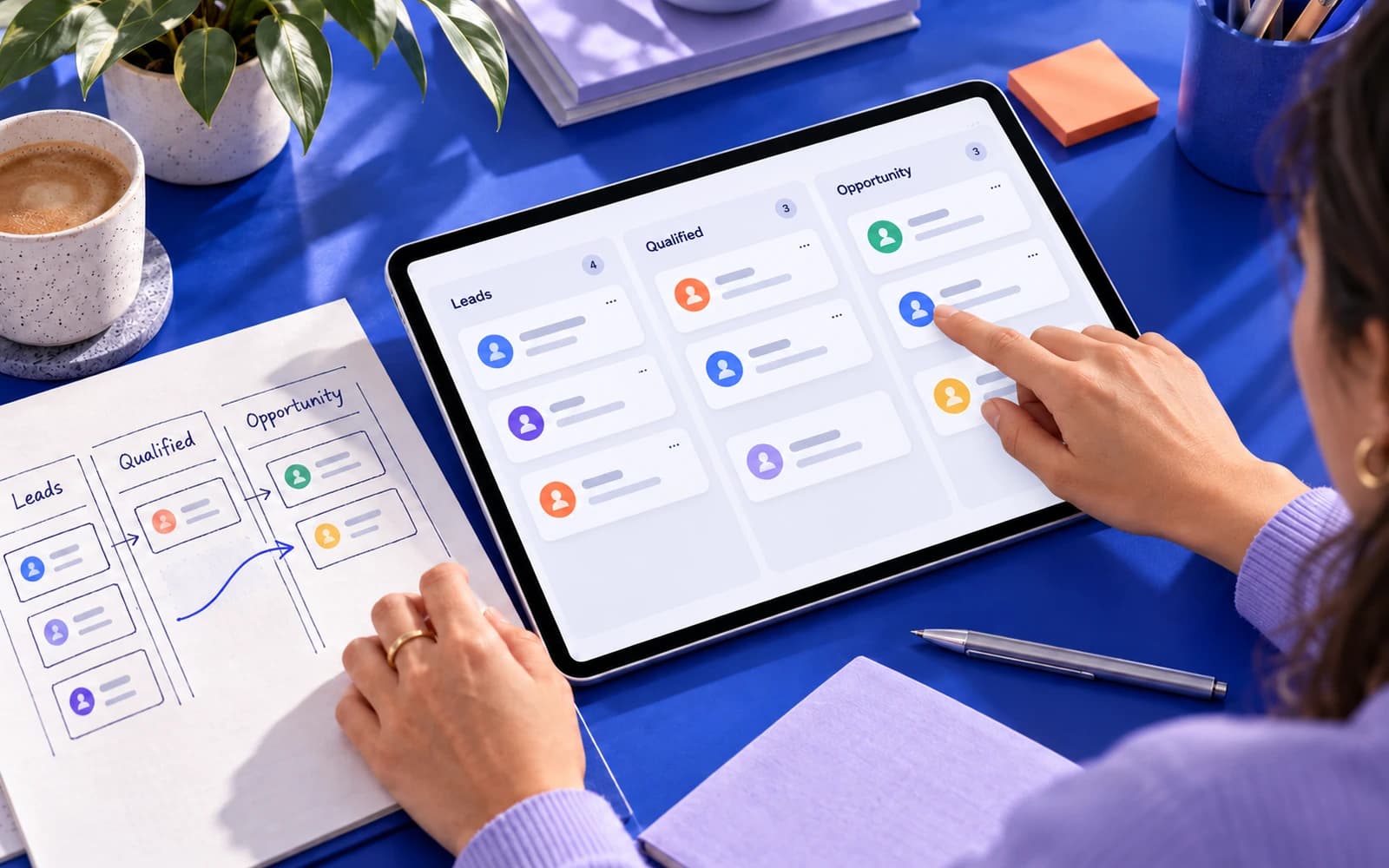 CRM and ERP8 min readWhen off-the-shelf CRMs can't keep up: when a business needs its own CRMHow to tell that amoCRM or Bitrix24 no longer fit, and what a custom CRM built around your processes gives: data in Kazakhstan, licences, links to 1C and Kaspi.
 Automation8 min readScattered services hold back growth: how to bring a business into a single systemThe CRM does not know about the warehouse, the warehouse about the website, the website about Kaspi. What scattered systems cost and how to connect them.
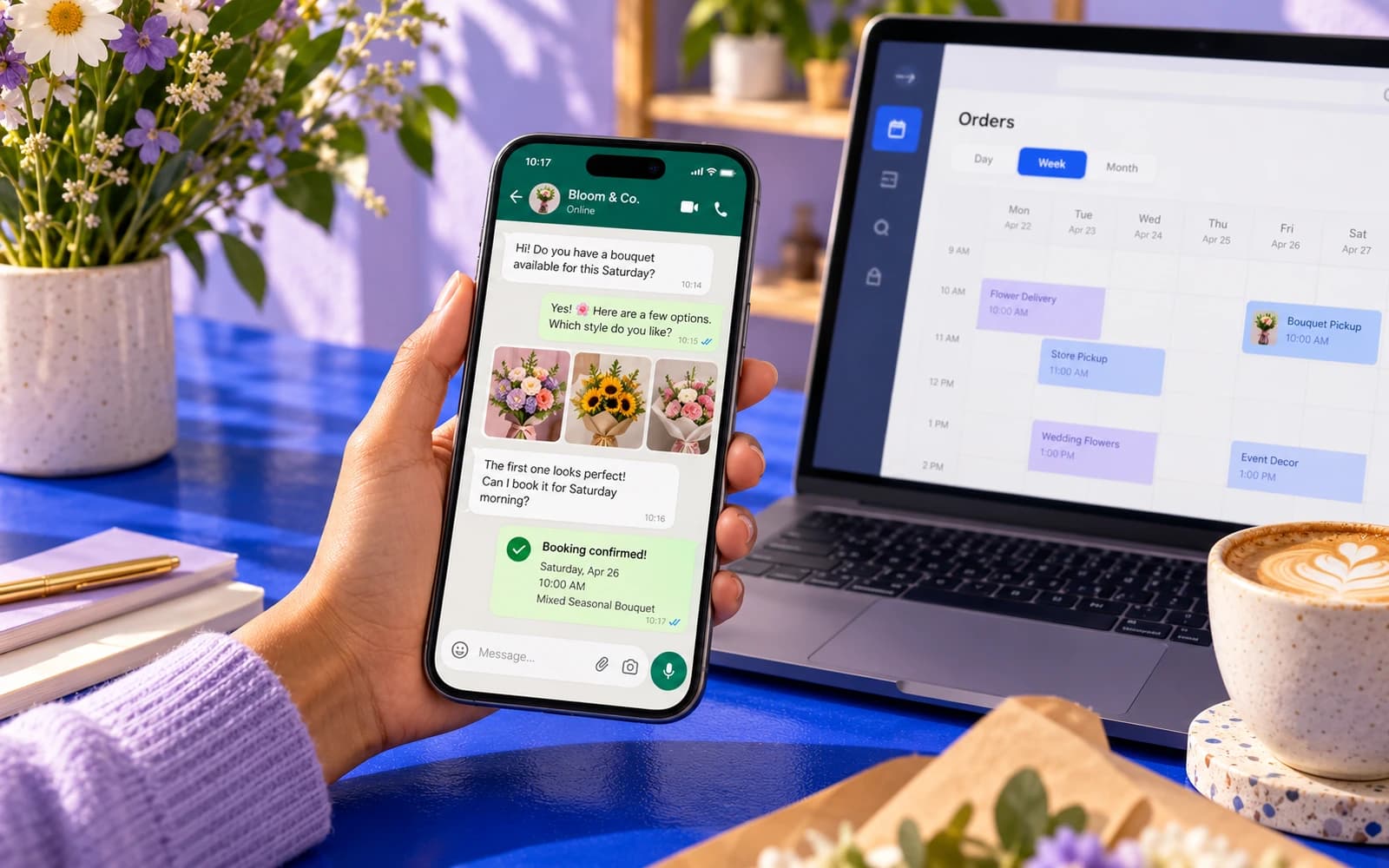 Automation14 min readWhatsApp automation for business: a practical guideWhatsApp automation for business: what to automate, opt-in and template rules, how Meta charges for messages from October 2026, tools and how a rollout runs.
Shall we discuss your project?
We will tell you what it costs and how long it takes. The price is fixed in the contract.