TeleCard: Crypto Wallet in Telegram
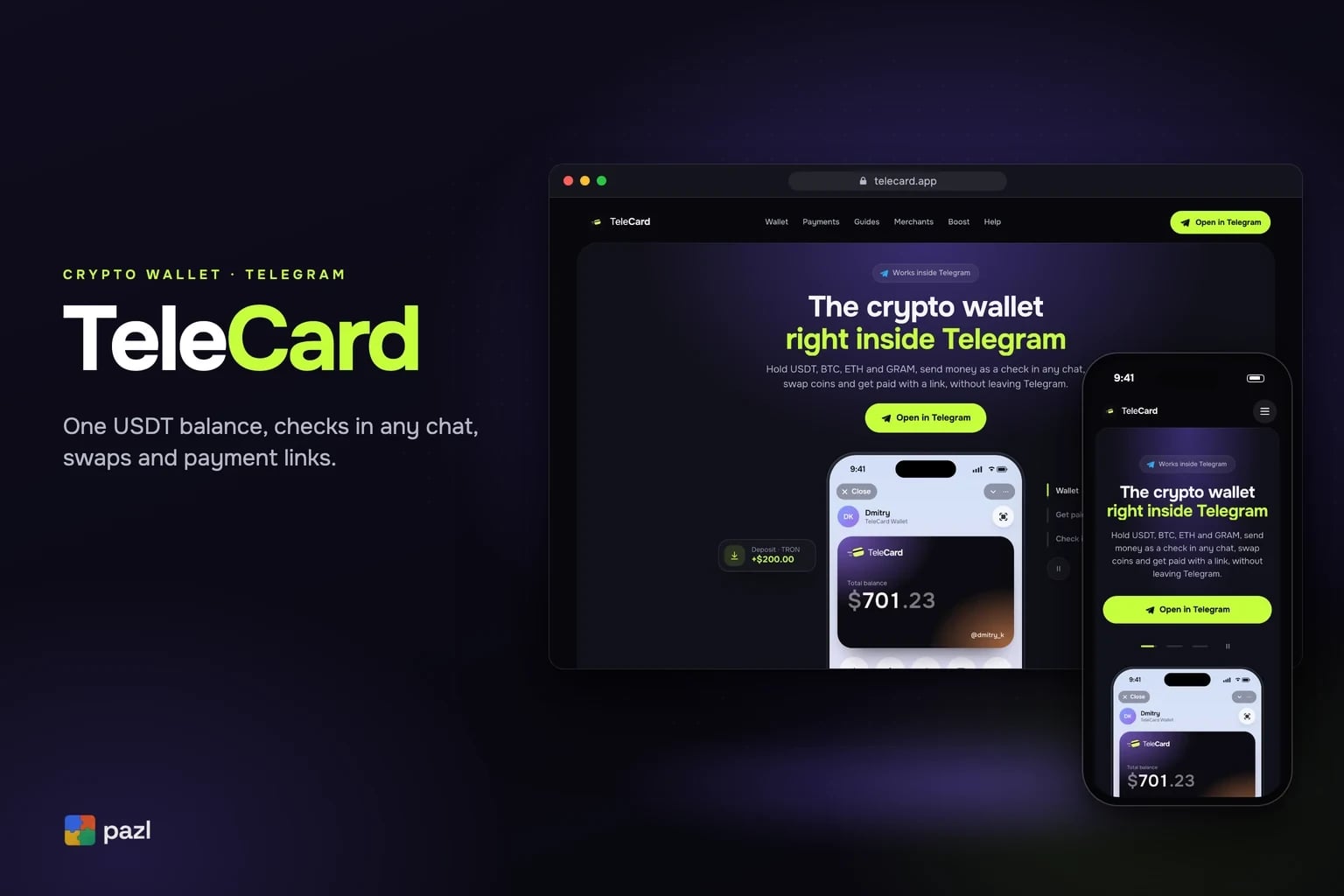
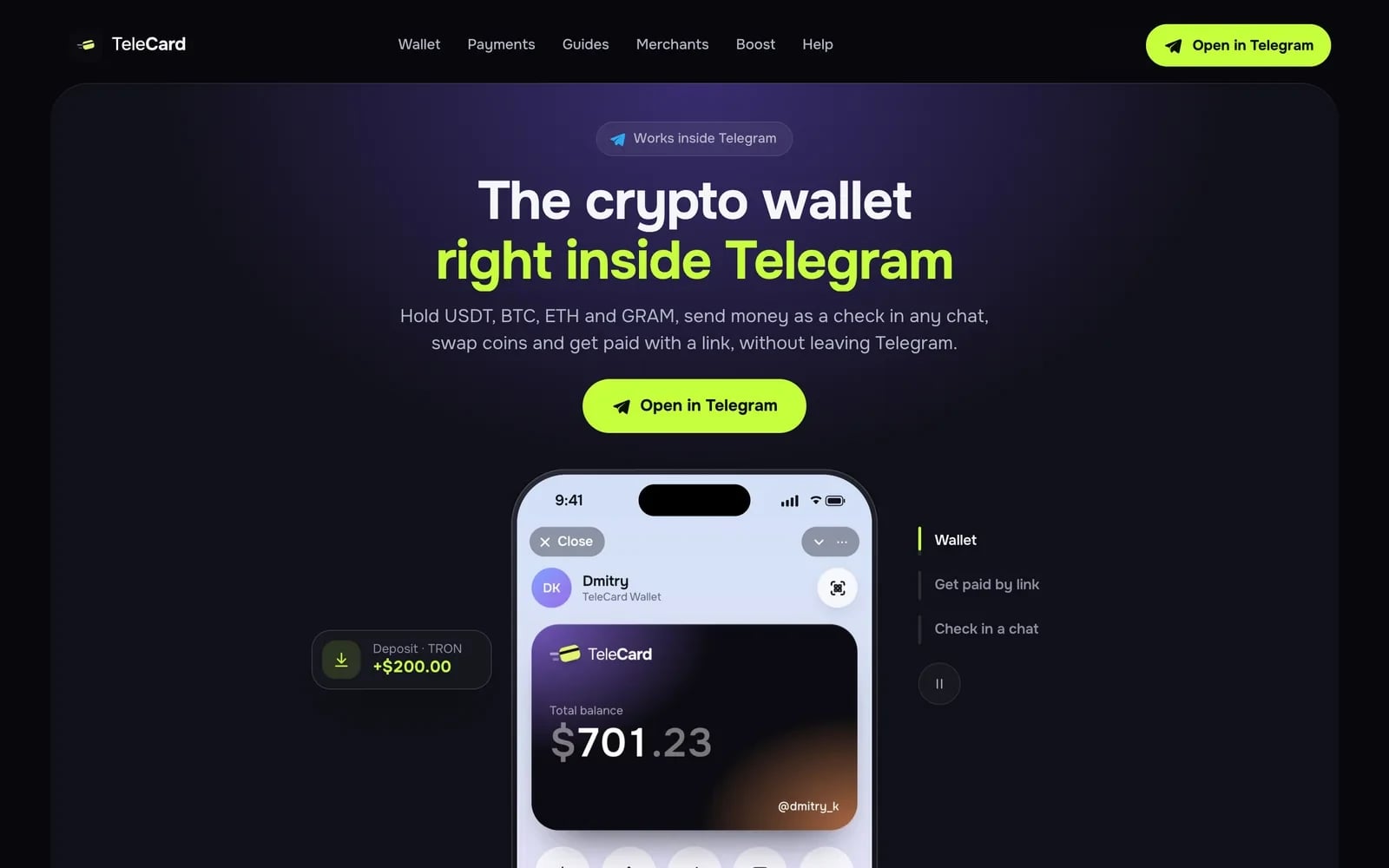
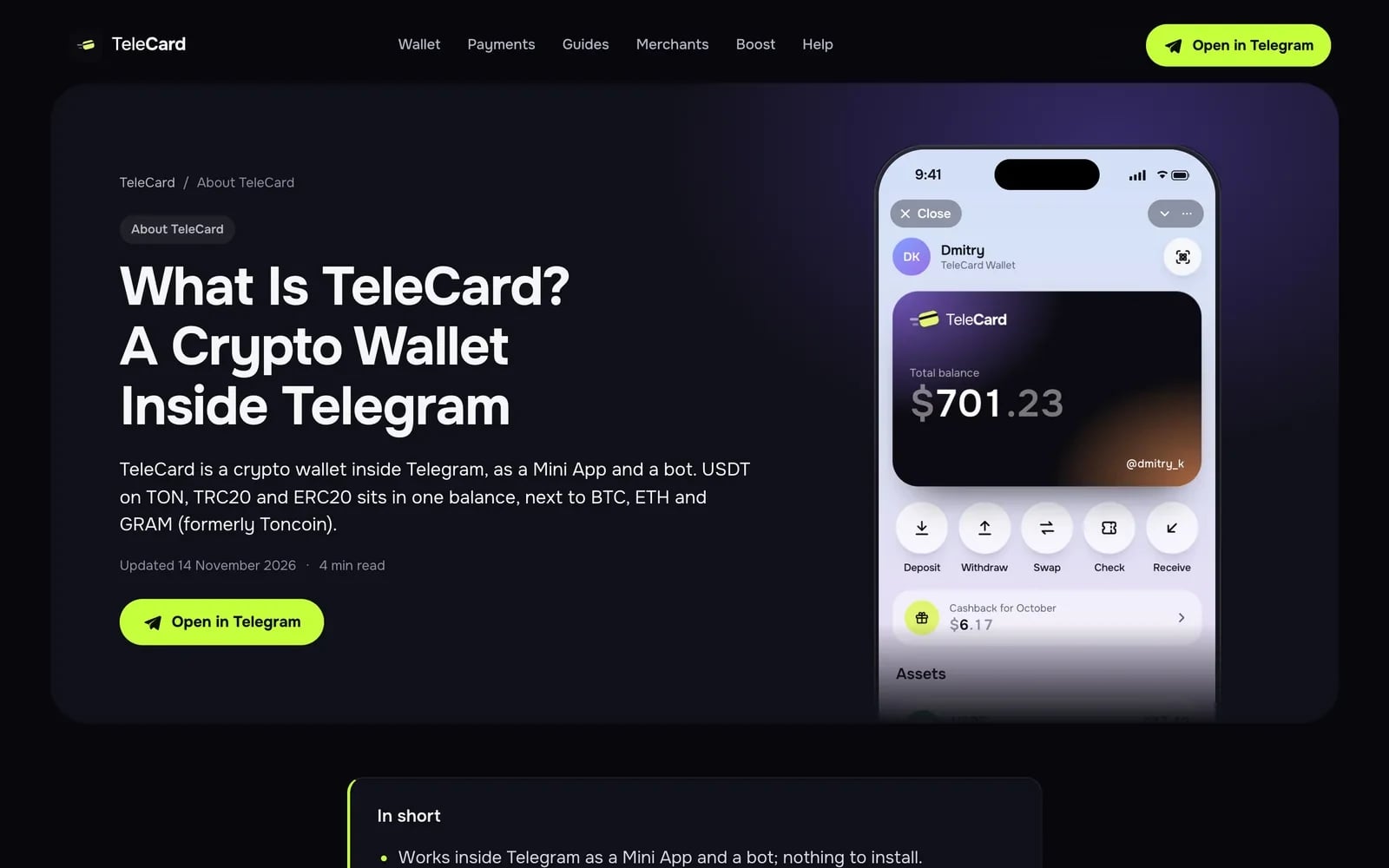
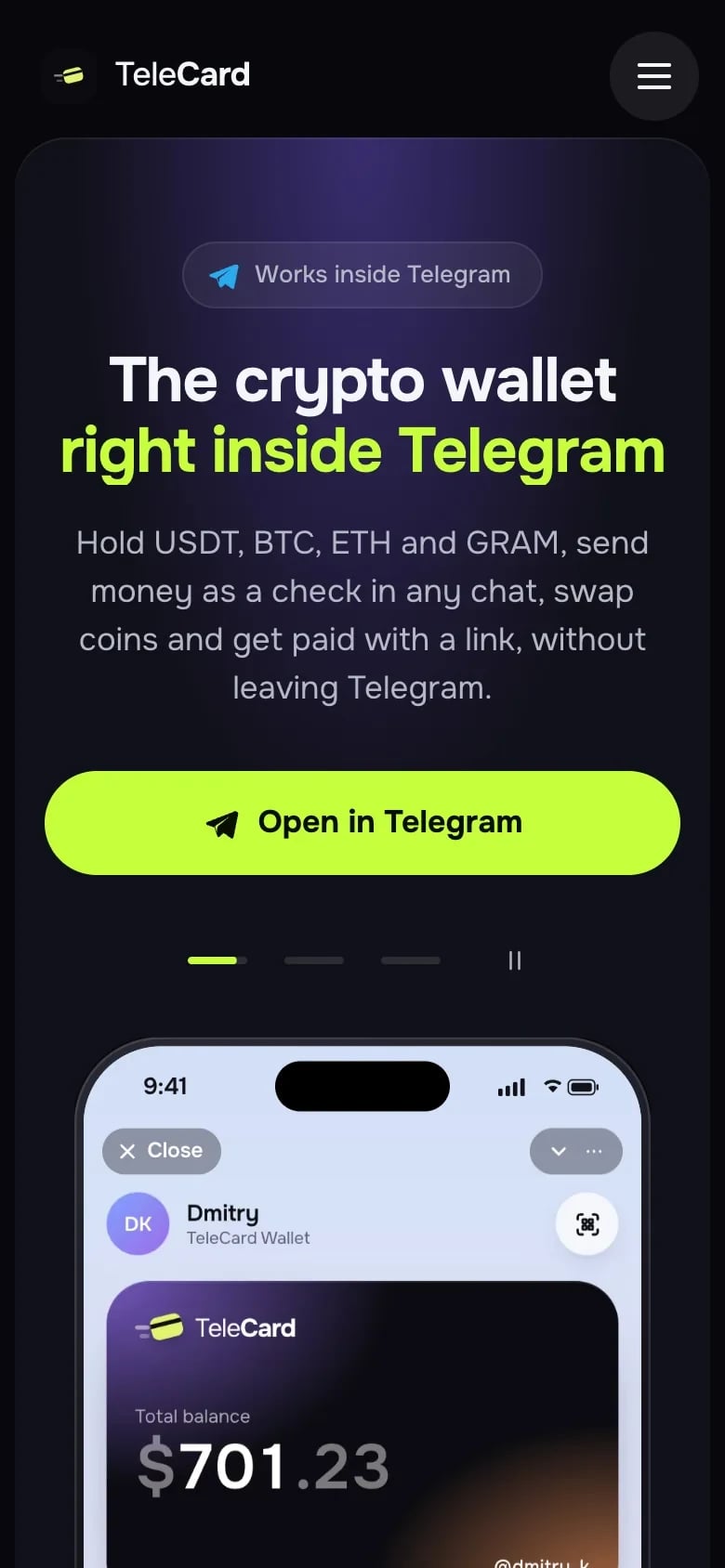
TeleCard is a crypto wallet that lives inside Telegram, as a Mini App and a bot. We designed, built and run all of it ourselves: the wallet, the bot, the back office and the website.
- Project type
- Our own product
- Industry
- Crypto wallet
- Platforms
- Telegram Mini App and bot, website; iOS and Android coming soon
- Our role
- Product, design, development and operations
Who uses TeleCard
People who already spend their day in Telegram and want their crypto there too: no extra app, no email sign-up and no seed phrase to write down.
- First-time users who want a wallet that opens in a minute.
- Friends, families and teams who settle up in a chat with a check.
- Stablecoin holders who now and then swap for BTC, ETH or GRAM.
- Creators and freelancers who want a personal link to get paid.
Why we built a wallet inside Telegram
Sending crypto to a friend usually means another app, a long address and the same network on both sides: one wrong choice and the money is stuck. We wanted money to move the way messages do, right in the chat, with the habits of a bank behind every tap.
- No seed phrase to lose and no address to copy for a friend.
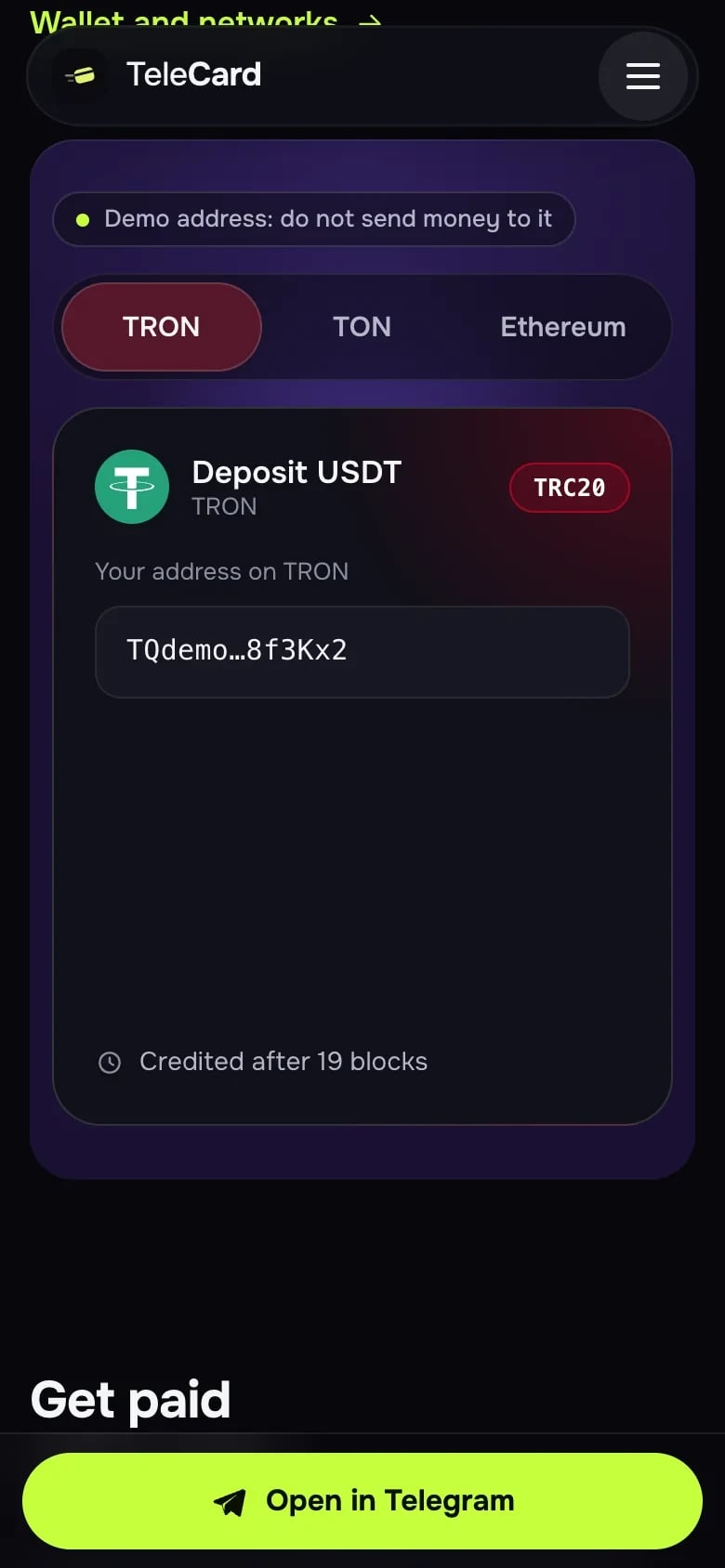
- One USDT balance, whichever network the money came from.
- Every money action confirmed with a passcode or Face ID.
What we built into TeleCard
One USDT balance
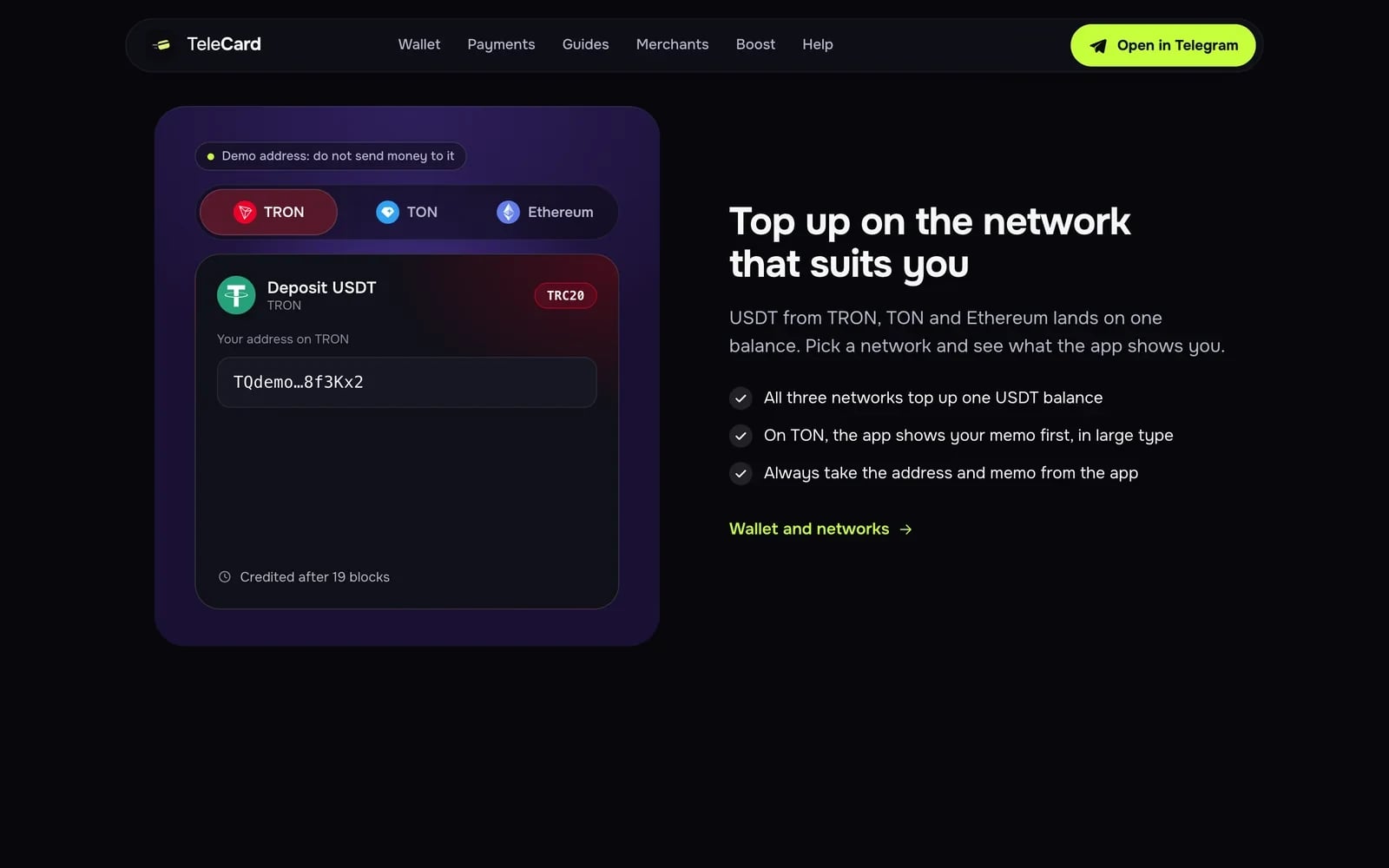
USDT from TON, TRC20 or ERC20 lands on one balance, next to BTC, ETH and GRAM. The network is chosen only when money leaves.
Checks in any chat
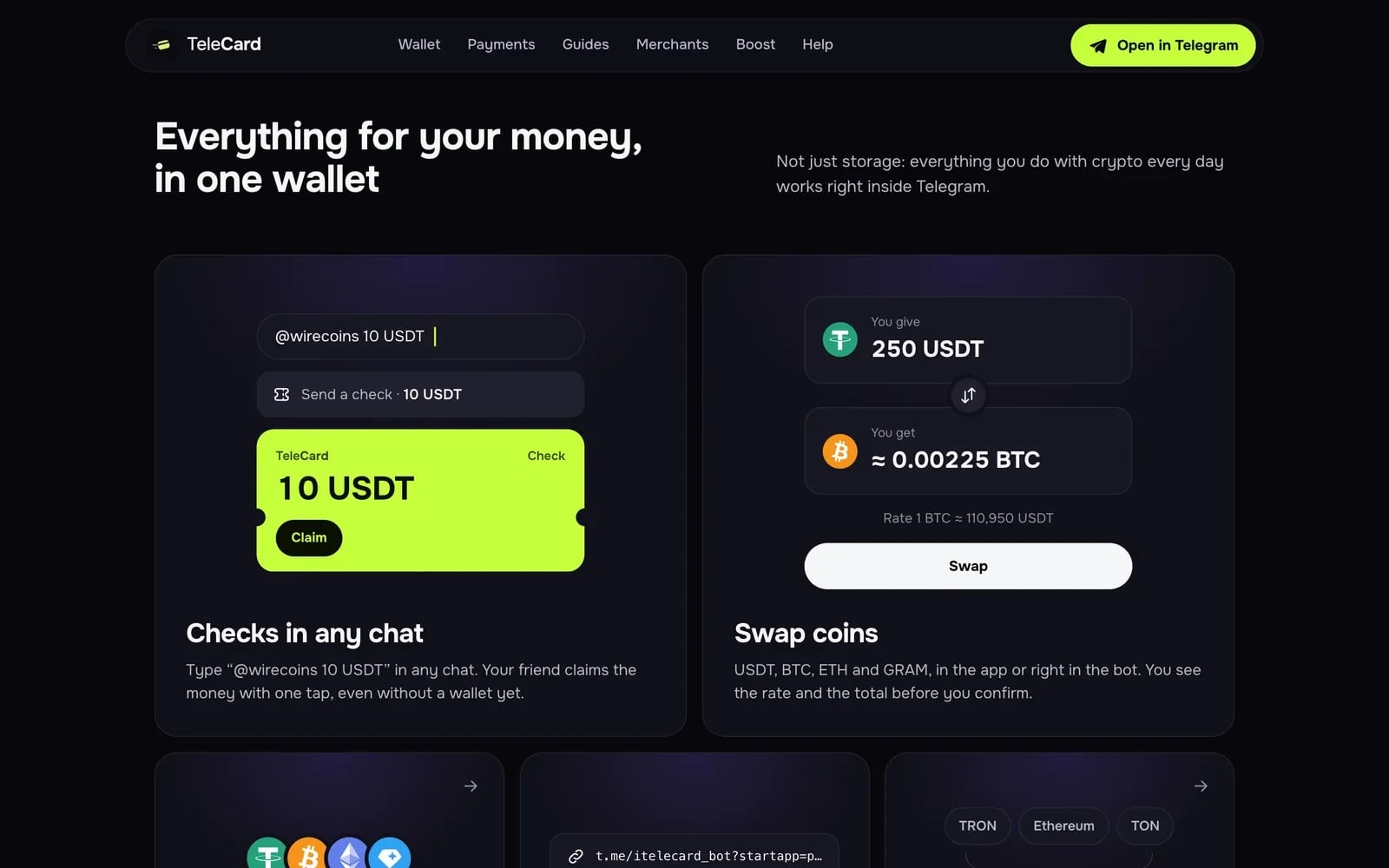
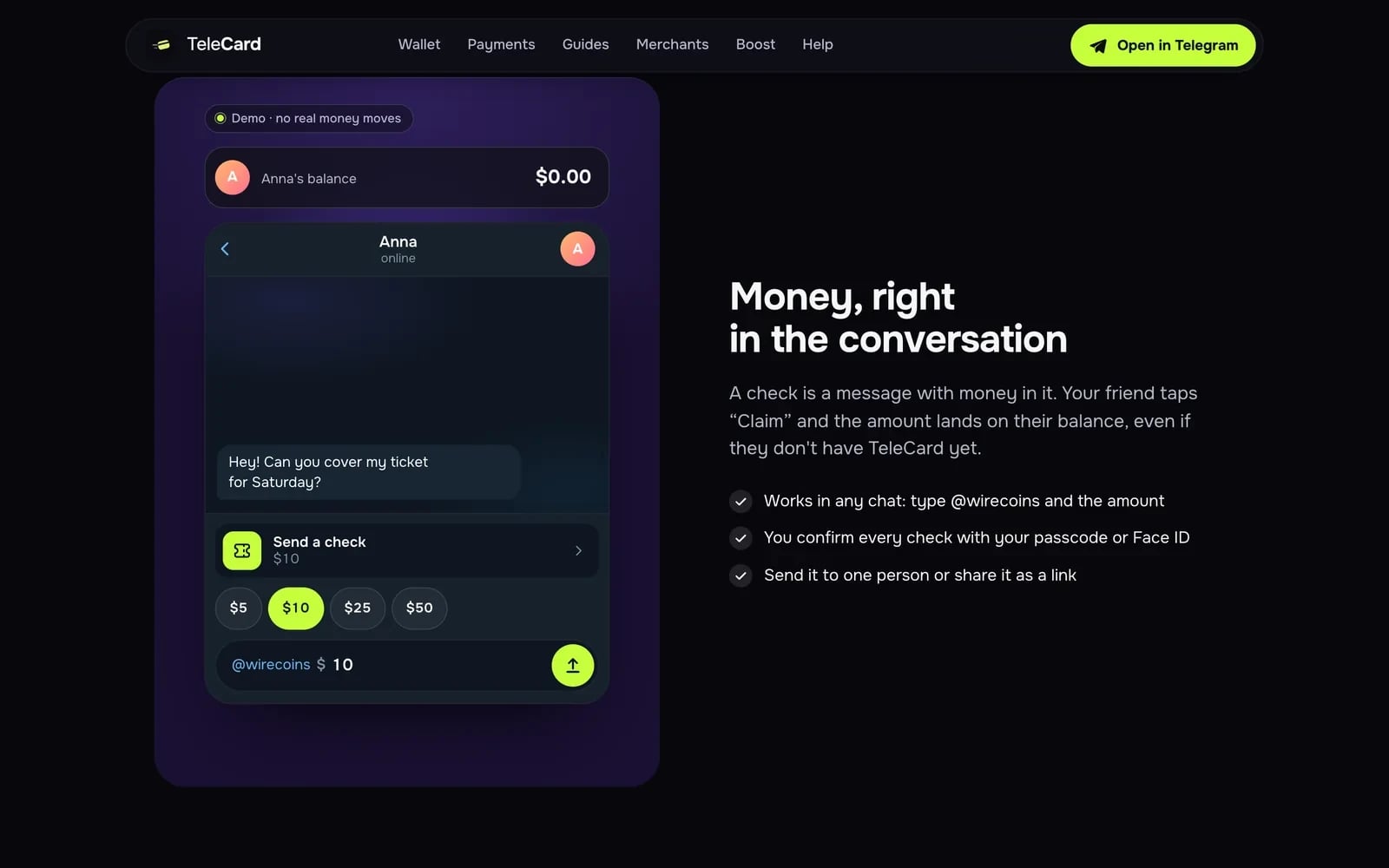
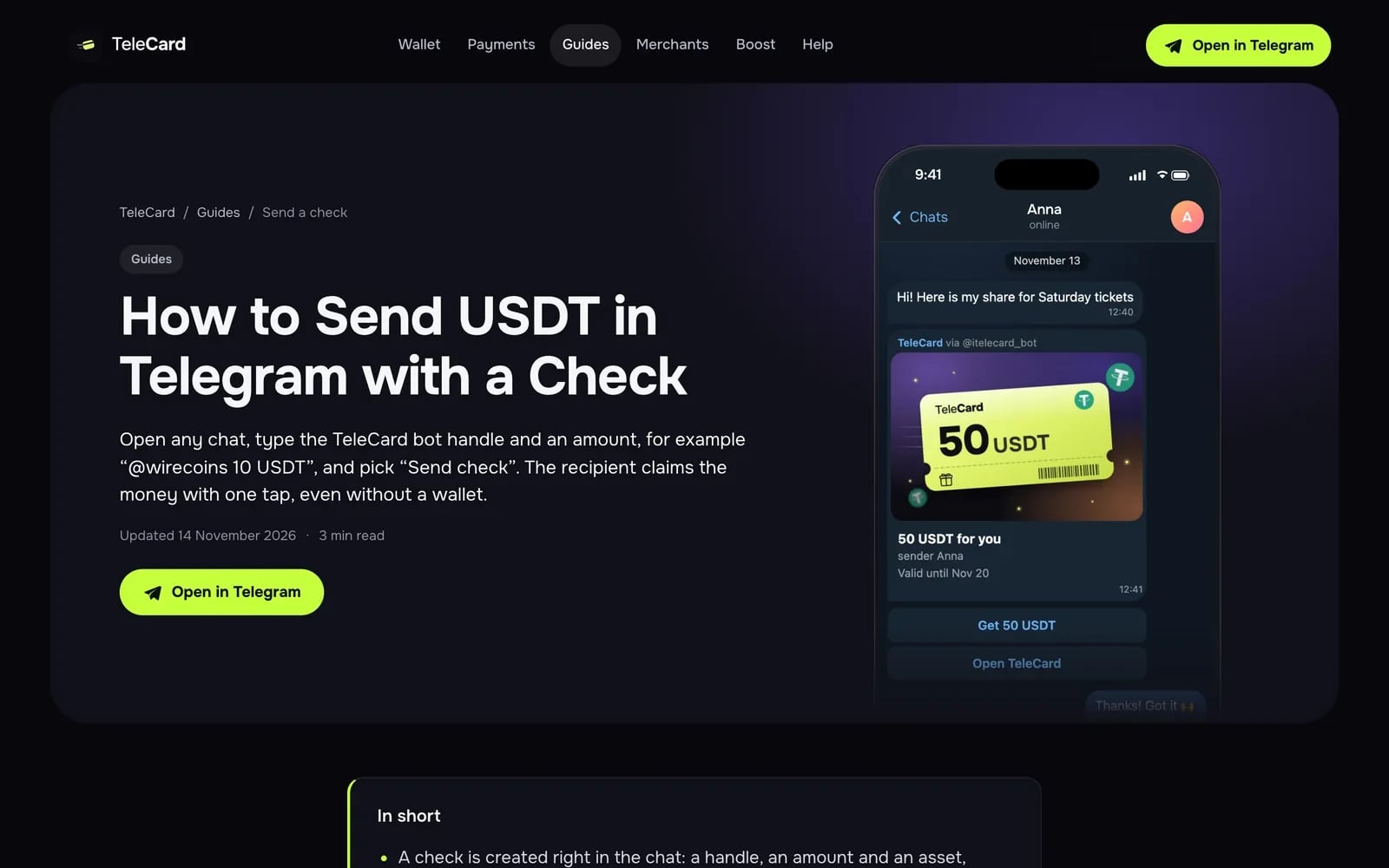
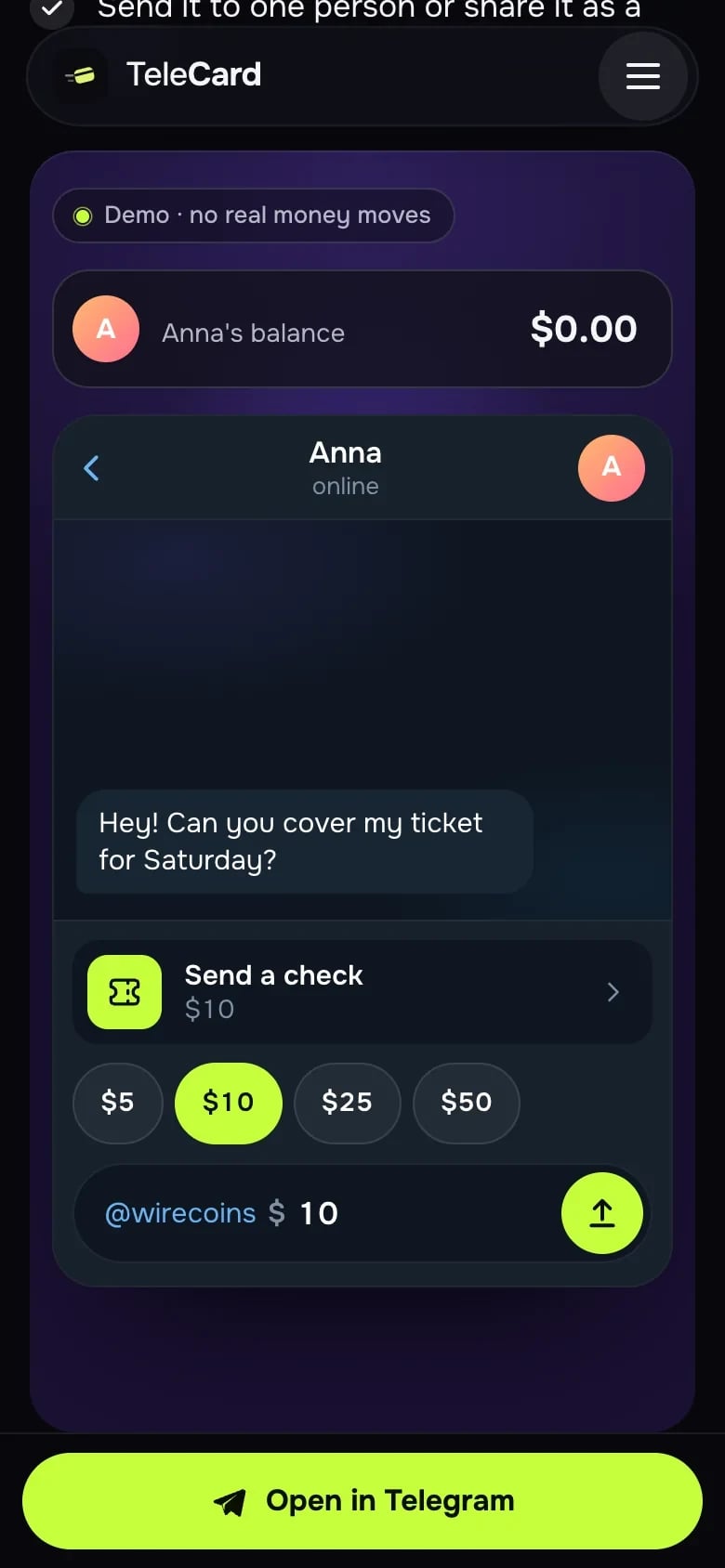
Type “@wirecoins 10 USDT” in any chat and send a check. The friend claims it with one tap, even before they have a wallet.
Invoices and payment links
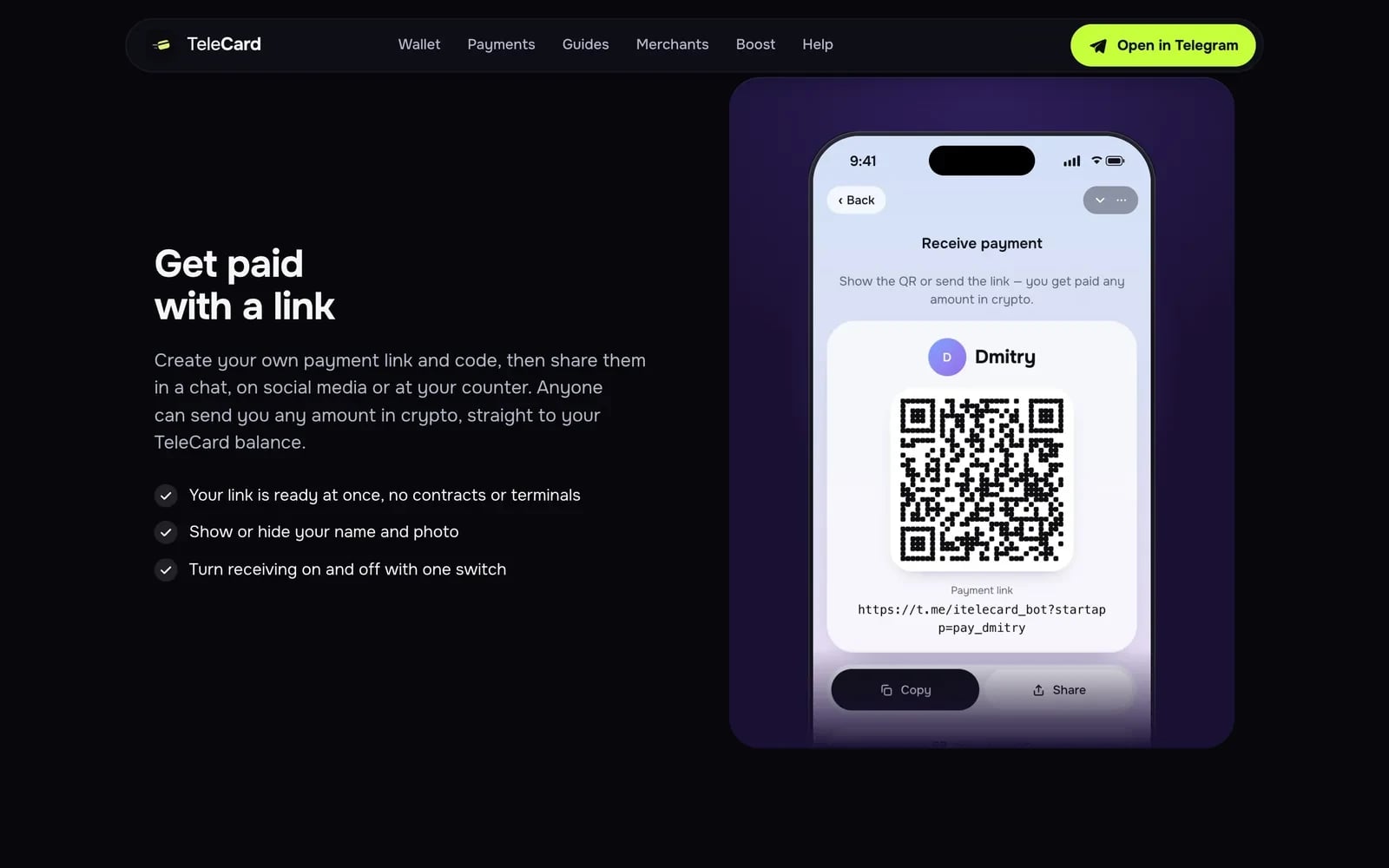
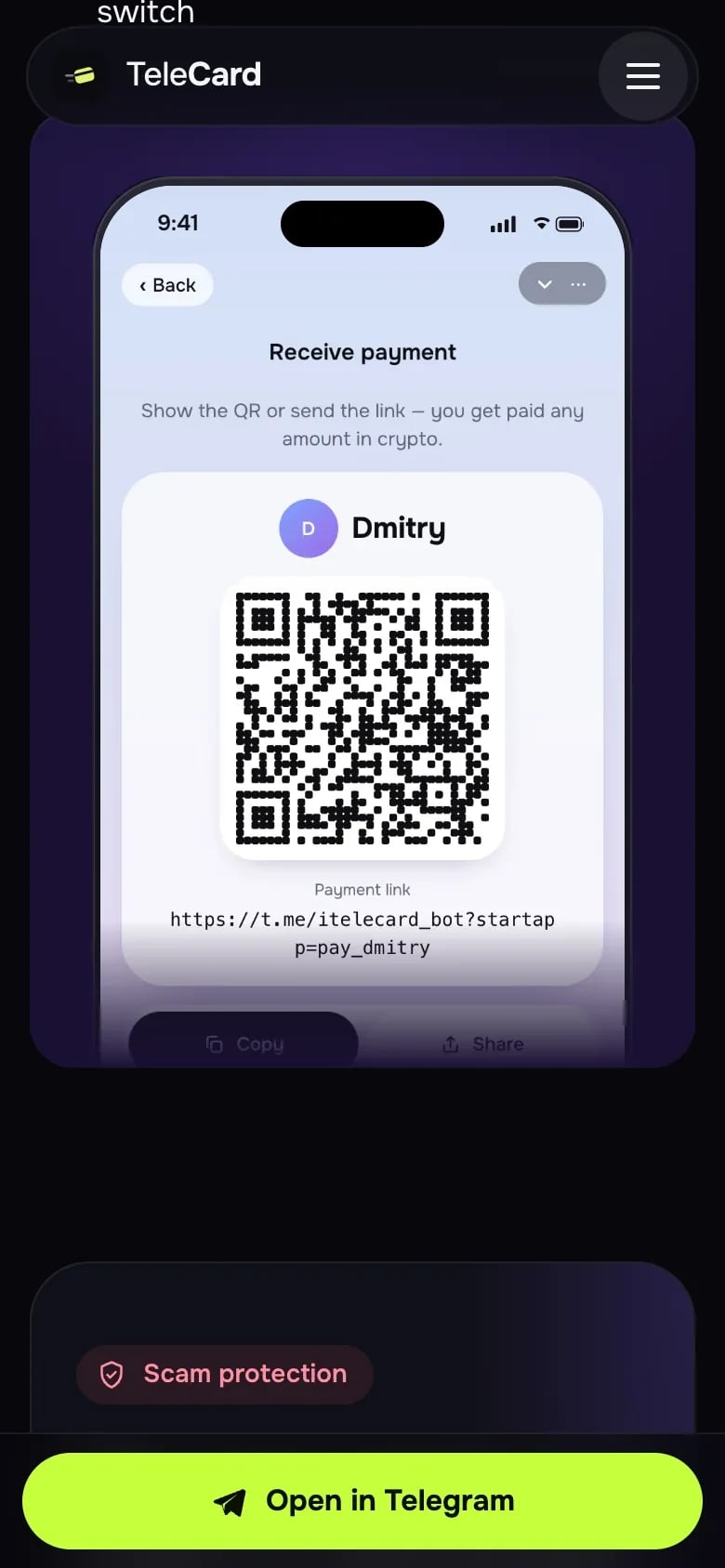
Ask for money with an invoice in the chat, or share a personal link and QR, also as a printable sign. Payers send USDT or GRAM on TON from any wallet.
Swaps
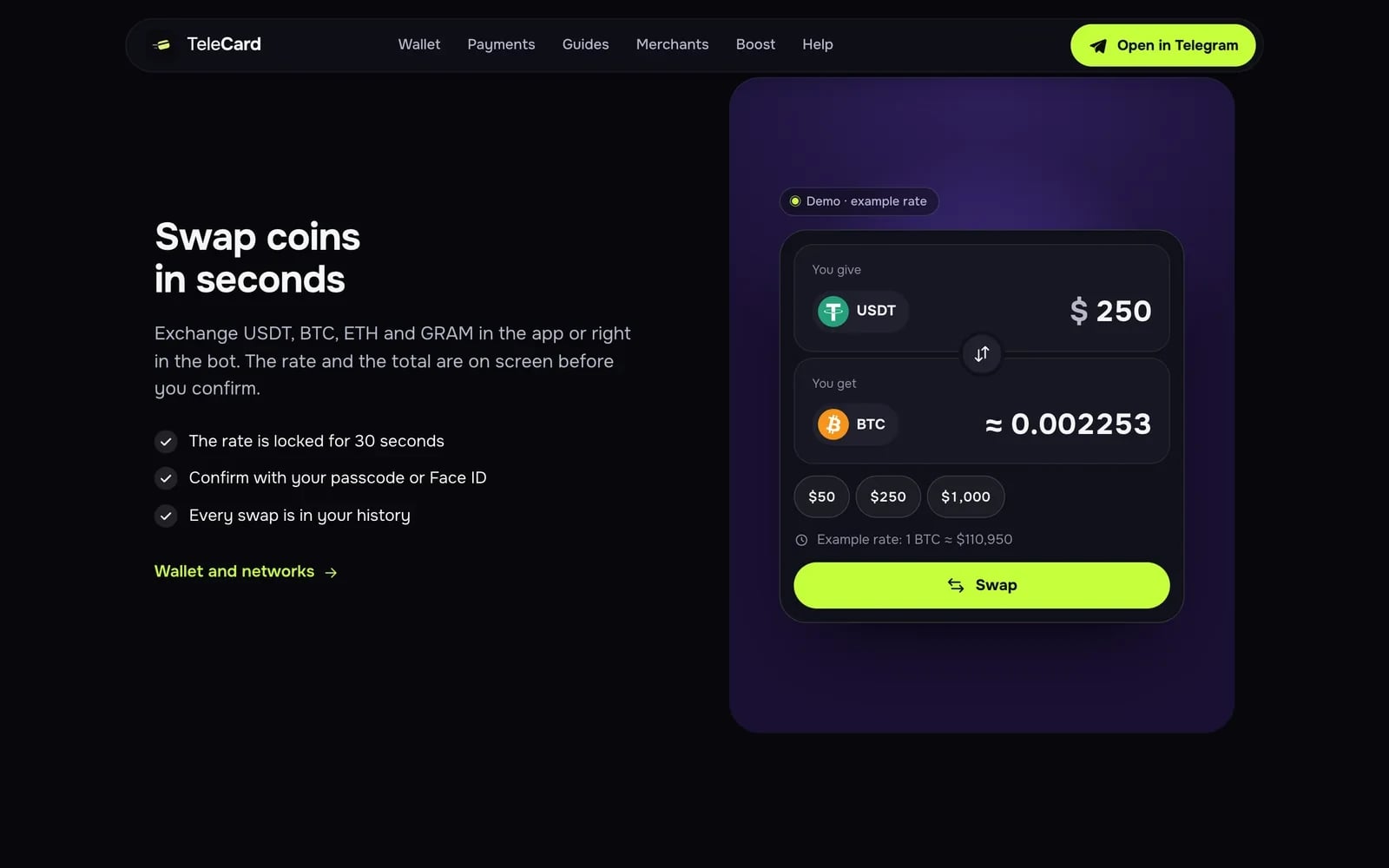
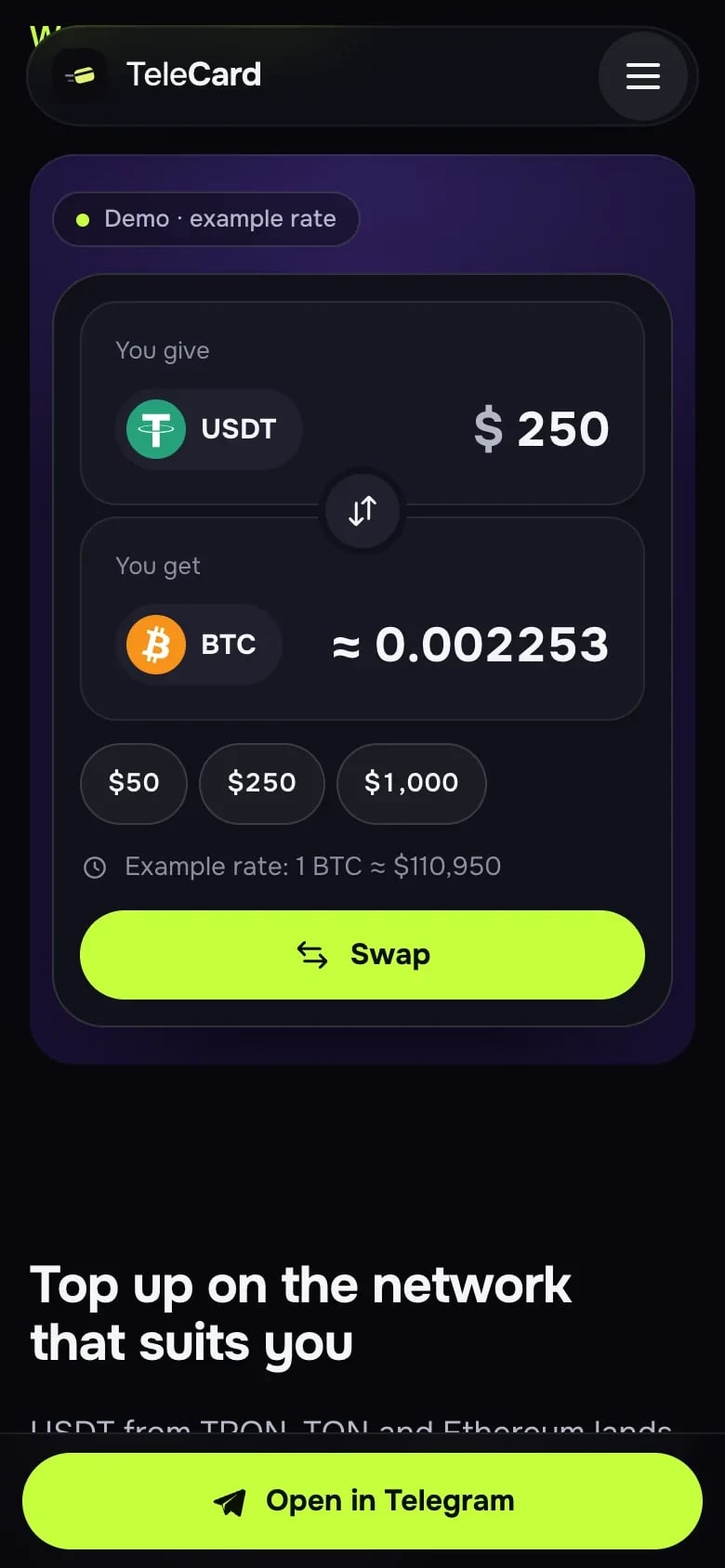
USDT, BTC, ETH and GRAM swap in the app or right in the bot. The rate and the total are on screen and hold for 30 seconds.
Sign-in without a seed phrase
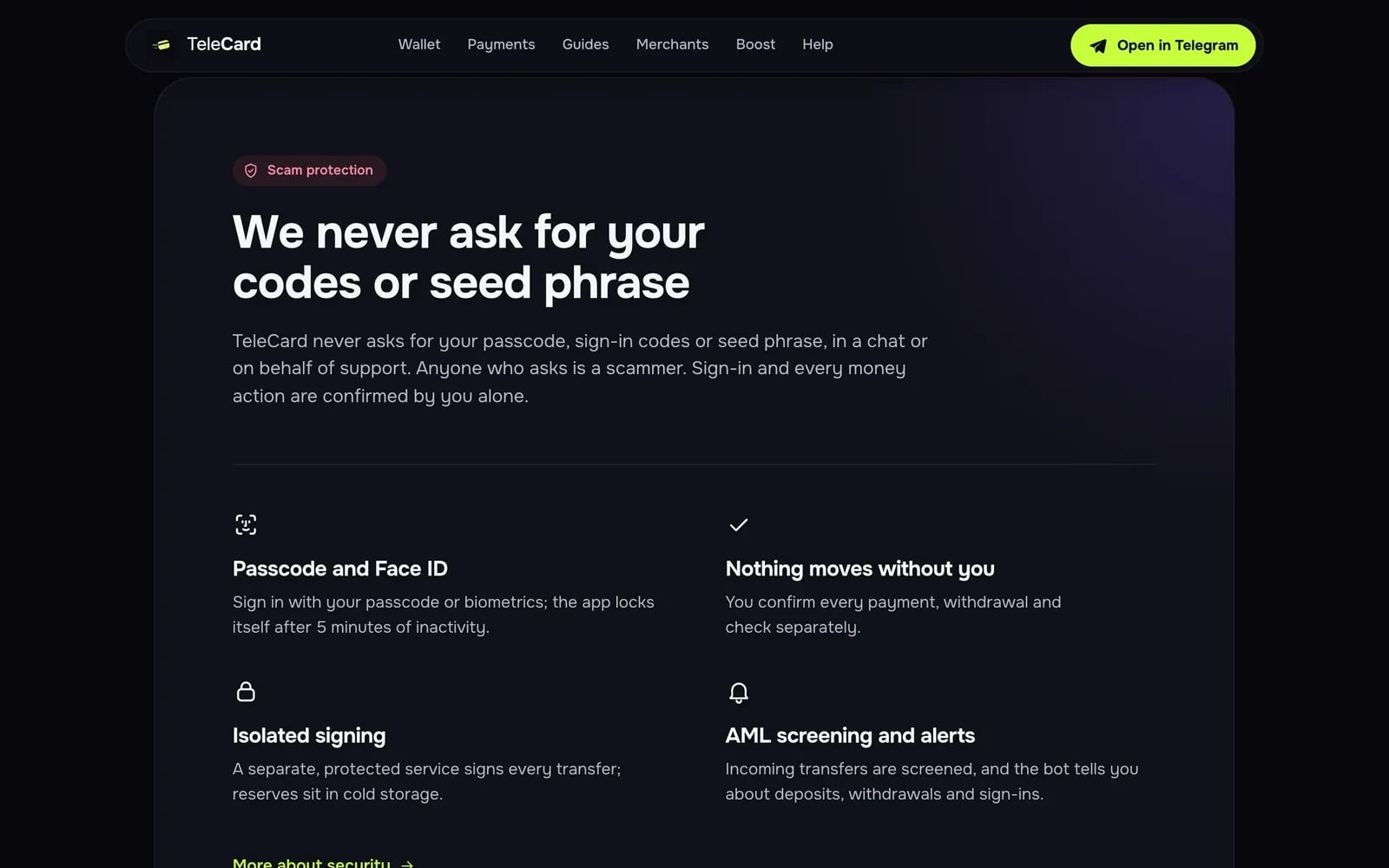
Telegram is the account; a passcode or Face ID opens the wallet, and it locks itself after five idle minutes.
Keys kept apart
A separate signing service with its own limits signs every transfer. Deposits are screened against the OFAC list and Tether blocklists.
How TeleCard works for a user
Open the bot
Tap “Open in Telegram”, set a passcode and turn on Face ID. No email, no password.
Top up
Send USDT, BTC, ETH or GRAM from any wallet or exchange; the bot reports the deposit.
Send, swap or get paid
A check in a chat, a swap between coins or a payment through the personal link.
Withdraw
Pick the coin, then the network: the fee and the exact amount that arrives come first.
How we built TeleCard
We built TeleCard like a small bank: a double-entry ledger, a back office with every client and transaction, and an emergency switch for each feature. Money code ships only after tests and a rehearsal of the migration on a copy of the live data. The wallet went live on 8 October 2026, version 1.0.0 followed the next day and 1.2.30 in November.
Keys in one place
Only the signing service holds keys. The API derives deposit addresses from a public key and never sees a private one.
Fees from the network
A withdrawal fee is worked out from the network’s real cost at that moment; a network short of gas shows as unavailable instead of queueing.
A back office like a bank
Client and merchant cards, IP history, staff roles, and a TOTP code to sign in and to change any critical setting.
Small, logged releases
Each release gets a version number and an entry in the change log, and the site shows users what is new.
A closer look at the screens
What TeleCard does
- Holds USDT from three networks in one balance, plus BTC, ETH and GRAM.
- Sends money as a check or an invoice in any Telegram chat.
- Swaps coins in the app and in the bot at a rate held for 30 seconds.
- Takes payments through a personal link and QR.
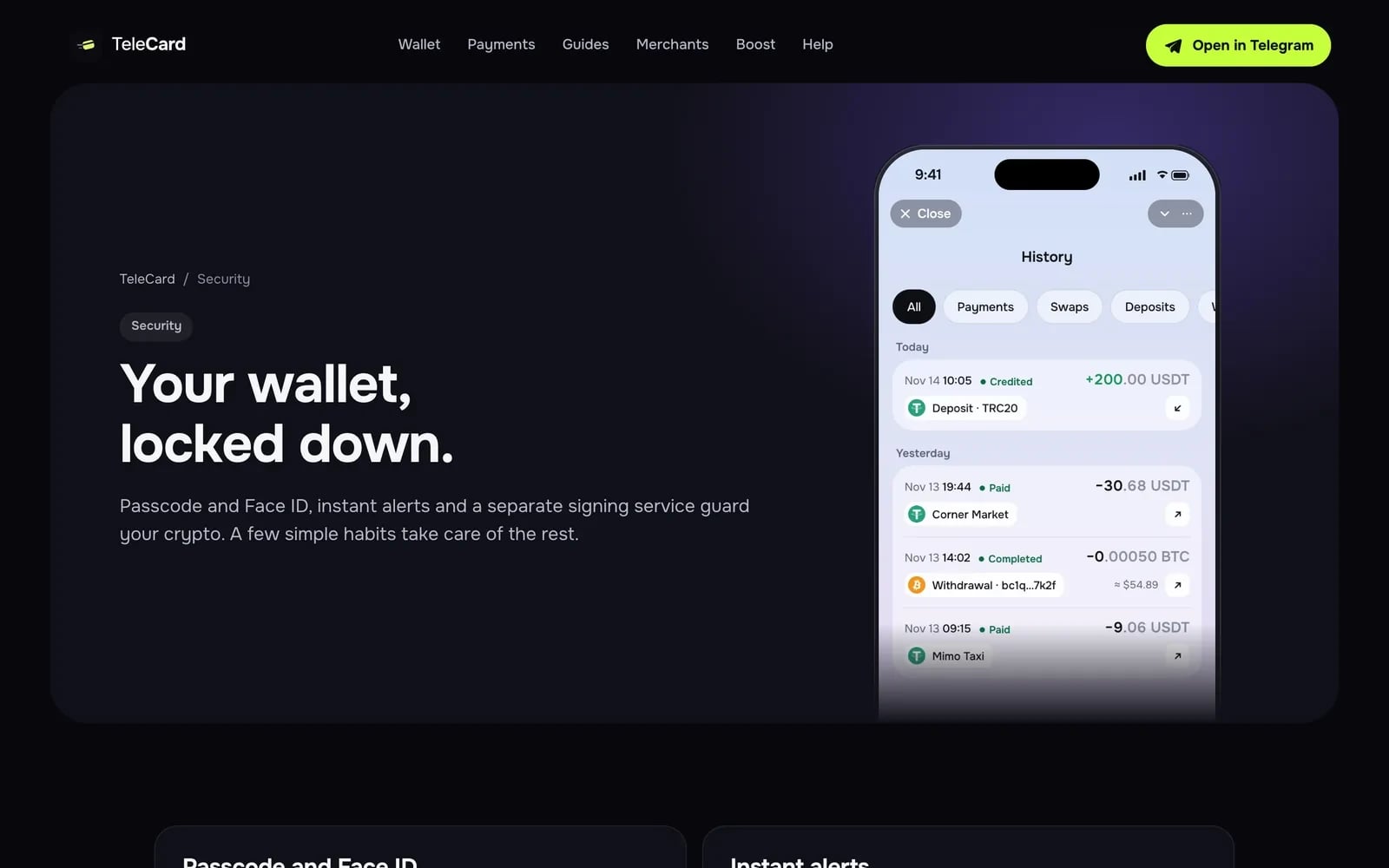
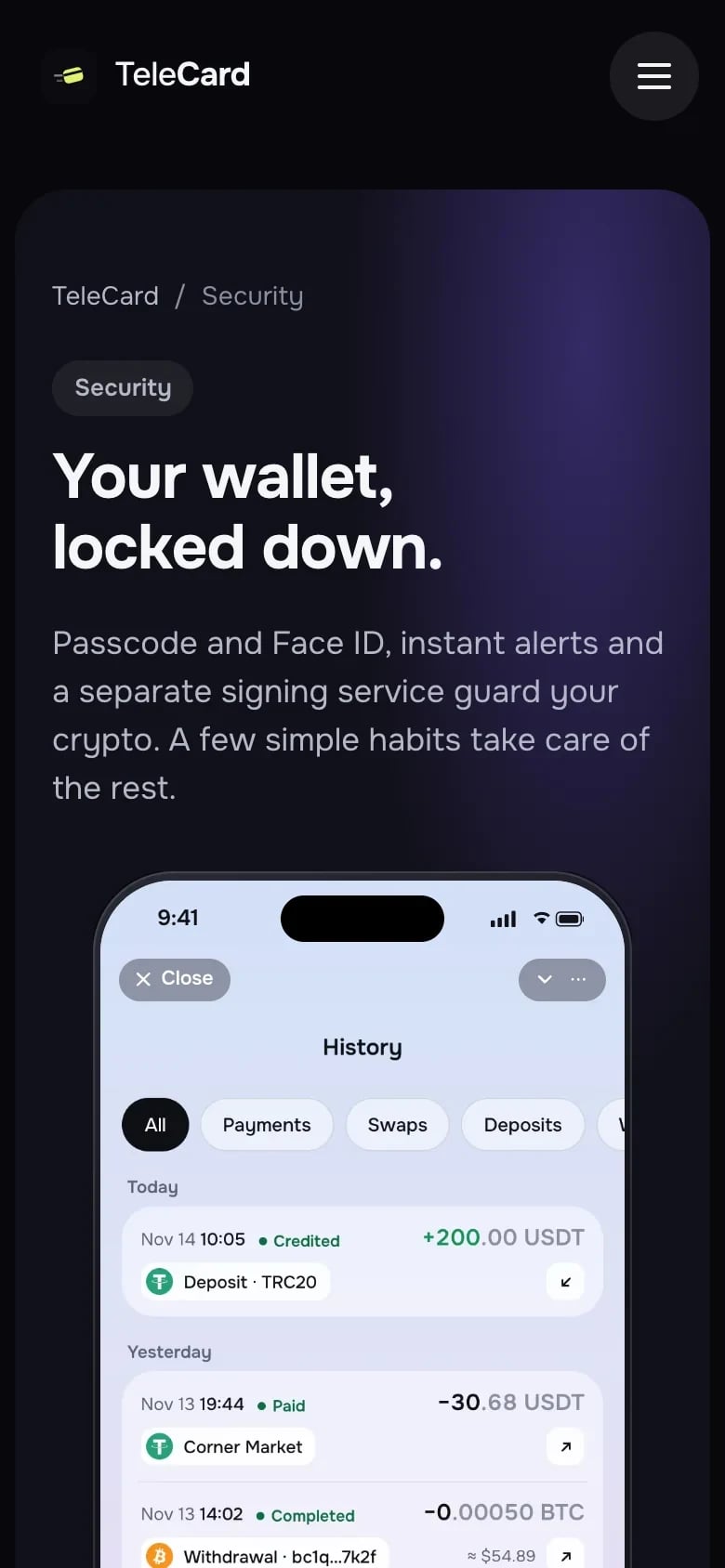
- Tells its user in the bot about deposits, withdrawals and new sign-ins.
- Gives verified merchants a cabinet of their own, with KYC and a deposit.
Questions about this project
No, it is our own product. We designed, built and run the wallet, the bot, the back office and the website telecard.app.