
Does your business need a full ERP, or is a system for your own processes enough?
Many companies do not need a heavyweight ERP with a long rollout. They need a system for their processes next to 1C. How it works and when a big ERP is worth it.
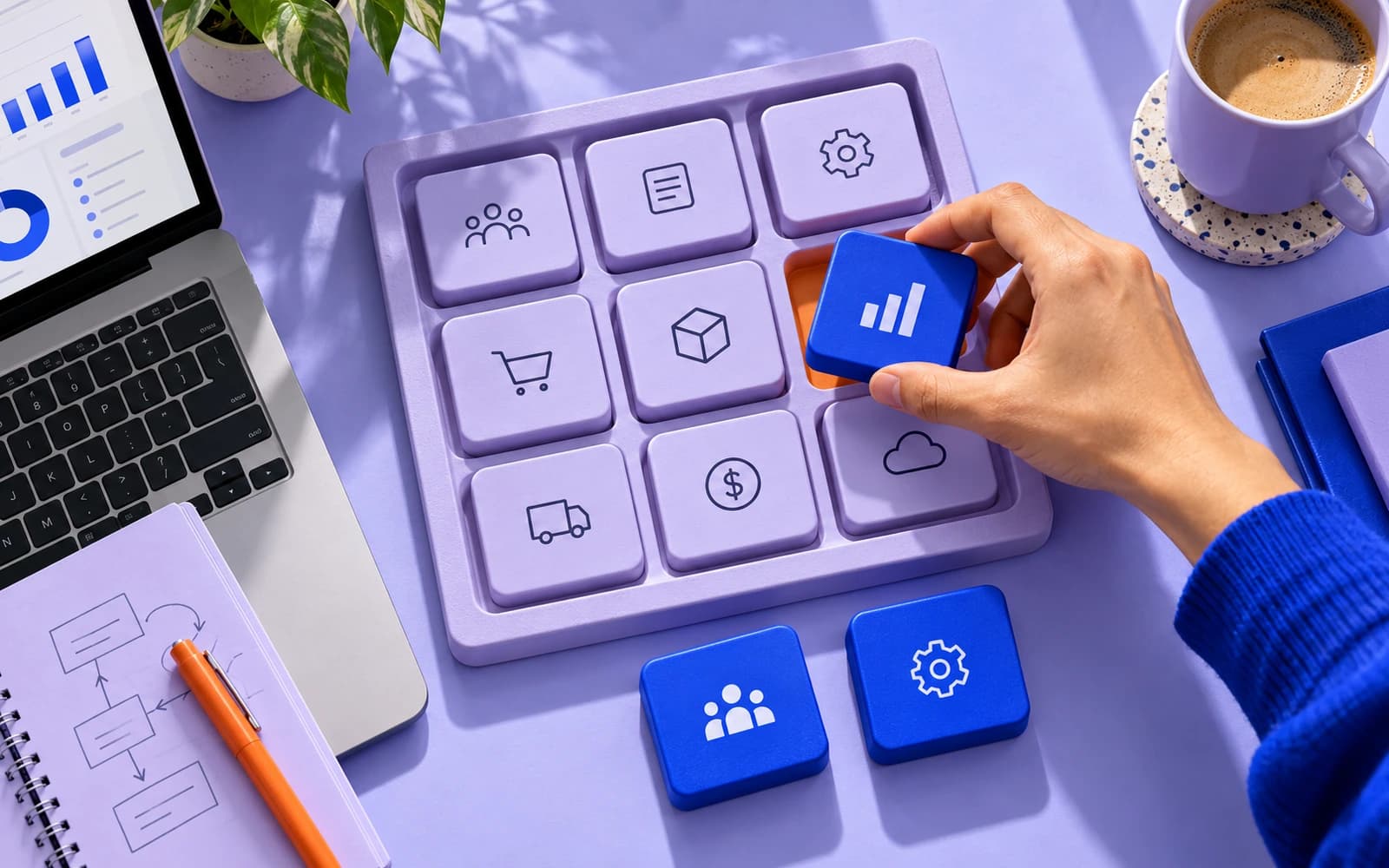
First, let's clarify: what is an ERP
ERP stands for Enterprise Resource Planning. It sounds complicated, but the idea is simple. Imagine that in your company the warehouse lives in one program, accounting in 1C, production in a third, and sales in an Excel spreadsheet entirely. Each department sees only its own slice. The data drifts apart, people waste time on manual reconciliation, and the leadership can't see the full picture.
An ERP is a system that brings all of this together in one place. Finance, warehouse, production, procurement, HR, sales: a single database, a single source of truth. Make a shipment, and the warehouse updates automatically. Record a payment, and finance reflects it instantly. No manual transfer of data between systems.
That's exactly why growing companies sooner or later start thinking about an ERP. And here an important question arises: do you really need a full-blown, heavyweight ERP platform, or can the task be solved more simply, faster, and more cheaply?
Rolling out a large platform such as SAP is a serious project. It covers finance, production, warehouse, procurement, HR, and sales. The rollout is expensive from day one: licenses, an implementation team, process redesign, training. And it takes months, often years. For a large enterprise with complex processes, that's a justified investment.
But most companies that come to us asking for "an ERP" actually want something else. They need a system for managing specific processes (production, projects, warehouse, service) that works conveniently, integrates with what they already have, and doesn't require a year and a half to roll out. They already have accounting software for reporting, usually 1C for Kazakhstan, and nobody wants to replace it.
For tasks like these, a full ERP is overkill. Paying for the entire feature set, using a small part of it, and waiting a year to launch is not the best strategy.
Where the confusion comes from
ERP is a concept, not a specific product. Enterprise Resource Planning means a system that brings together the management of a company's resources in one place. That could be SAP, Microsoft Dynamics, Odoo, a large 1C configuration, or a custom system designed specifically around your processes.
The problem is that for many people the word "ERP" is associated exclusively with heavyweight corporate platforms: long rollouts, high costs, and the need to rebuild processes around the system. In practice, the task is often solved in a fundamentally different way.
What the real task looks like for most companies
Take a manufacturing company. What it actually needs:
- Managing production orders: what's in progress, at what stage, which materials are needed
- Warehouse accounting: stock levels, movement, reservations against orders
- Planning the load on capacity and personnel
- Cost control for each order
- Transferring financial data to 1C for reporting
All of this is a set of concrete operational tasks. They don't require a full ERP platform with HR, CRM, asset management, and corporate document-flow modules. They require a system that covers exactly these tasks, and does it conveniently.
A custom operations system plus 1C: how it works
The setup is simple and well established. 1C stays where it already is: for regulated bookkeeping, tax reporting, and electronic documents. In standard 1C configurations for Kazakhstan, the exchange with the ESF e-invoicing system is provided by the vendor. The accountants know it, and nothing changes for them.
On top of it, a custom operations system is built for the specific business processes: orders, production, warehouse, projects, service, depending on what you actually need. The interface is designed around real-world workflows, not around a universal platform.
A two-way data exchange is set up between the systems. Product and counterparty catalogs, documents and payments move under an agreed scheme, and financial transactions from the custom system reach 1C without manual entry and without duplication. The accountant works in a familiar environment, and the operations team works in a tool tailored to their tasks. If accounting isn't in 1C or there are many documents, VAT invoices can also be issued straight from your system through an ESF integration.
What this gives you compared with a big ERP platform
Speed
Rolling out a big platform takes months and years. A custom system for specific processes launches in stages: the first module works within a few weeks, not after everything has been rolled out. The business starts seeing results far sooner.
Cost
A big platform with implementation requires a serious investment up front. A custom system for a specific set of tasks is, in most cases, cheaper, because it doesn't include features you don't need. You pay for what you actually use, and there is no fee per workstation.
Ease of use
The interface of a big platform is functional but universal, designed for a wide range of scenarios. A custom system is designed around your employees' real workflows. Fewer clicks, fewer extra screens, higher work speed. Each role has its own screens: the storekeeper sees one set, the executive another.
Flexibility to evolve
Any change in a big platform is a platform customization with its own constraints and costs. A custom system adapts to new requirements without architectural limits. As the business grows, the system grows with it.
Mobile access
A web interface and a phone version are a standard part of a custom system. A worker on the factory floor, a manager on the road, an executive on a business trip: all work with the system from any device. With a big platform this is achievable, but it usually requires separate solutions and additional costs.
Where Odoo fits
Between a heavyweight platform and building from scratch there is a middle ground: Odoo. It is a modular ERP with an open core, where you can switch on only the modules you need, such as inventory, sales and manufacturing, and adapt them. For standard processes it is a fast route. It has downsides too: your own logic still has to be written, and moving to new platform versions takes work. When to pick Odoo and when a custom system pays off better is covered in Odoo or custom development.
When you do, in fact, need a big ERP
The honest answer: there are tasks where a big platform is the right choice. If you need deep integration of all accounting circuits in a single platform, complex production planning to enterprise standards, or it's fundamentally important to be able to find a new specialist on the market at any moment, a big ERP will meet those requirements better. If you already run such a platform, for example SAP Business One, we connect it with the website, a portal and other systems rather than suggesting you replace everything.
We work with both approaches, and at the first consultation we tell you honestly which fits your task better. If the answer is a big platform, that's what we'll say. If a custom system solves the task faster, cheaper, and more conveniently, that's what we'll propose.
Examples of tasks where a custom system wins
- Production with non-standard order logic and a specific cost-calculation method
- Service companies managing field crews and tracking working hours
- Construction and project-based businesses with budget control per site
- Wholesale trade with non-standard pricing and logistics, including sales through Kaspi
- Transport companies with a fleet, trips and documents; more in ERP for logistics
- Any business where the operations team needs to work with the system from a phone or tablet
Cost and where to start
A custom system starts with a first stage: a review of processes and roles, one module (warehouse, orders or production), a link with one system such as 1C or the ESF e-invoicing system, reports and Excel export. The first stage of a custom ERP starts from 2 650 000 ₸. The price and scope are fixed in the contract, and further modules are estimated before work begins. The work carries a six-month warranty, and the source code and access are yours.
To make the first conversation concrete, prepare three things: a list of the processes that now live in Excel and messengers, which 1C configuration you have and who works in it, and a couple of examples of documents that are put together by hand. From these we suggest which module to launch first and compare the options: a custom system, Odoo, or improving what you already have.
What we do on this topic
Short and to the point.
Can a custom system really be integrated with 1C?
Yes, this is a standard task. Catalogs, documents and payments move between the system and 1C under an agreed scheme, without manual entry and without changing the familiar workflow of the accounting team. Database access is agreed with your 1C specialist.
How much does a custom operations system cost?
It depends on the set of modules and integrations. A first stage with one module and a link to one system starts from 2 650 000 ₸. We give the exact price after reviewing the requirements and compare it against the alternatives, including ready platforms.
What if the business grows and we need more functionality?
A custom system scales without the limits of a platform: new modules are added as tasks grow. If at some point you need to move to a big ERP, that is also doable: the data migrates.
Will the accountants need to be retrained?
No. The accounting team keeps working in 1C, and nothing changes for them. Data from the operations system flows into it automatically. Only the operations team learns the new tool, and the interface is designed specifically for them.
Can we issue ESF invoices from our own system?
Yes. The ESF e-invoicing system has an API for accounting systems: VAT invoices and, if needed, accompanying waybills for goods (SNT). You need digital signature keys and the accounting system registered in the ESF system, and we help with the setup. The scope is estimated separately.
Read also
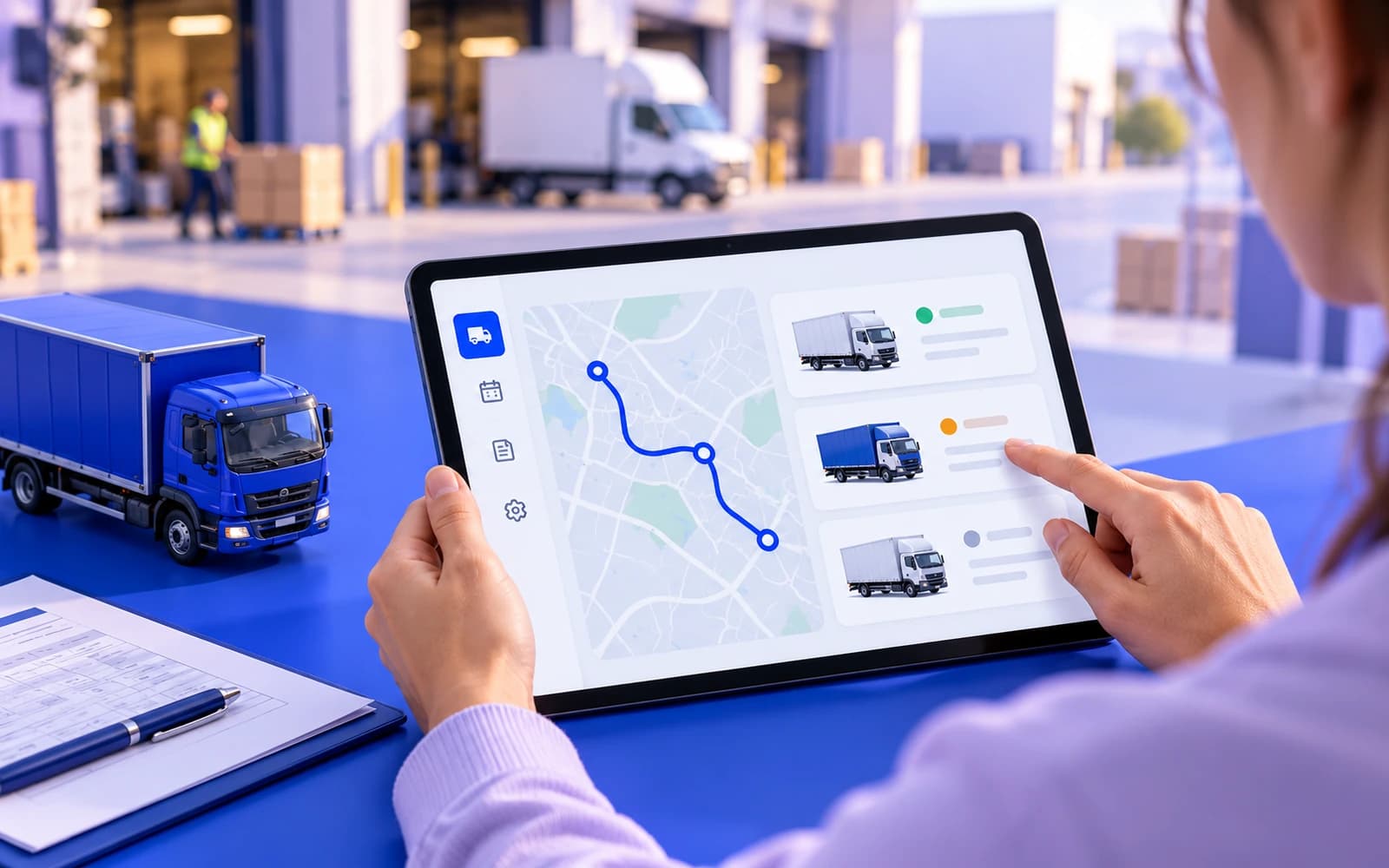 CRM and ERP11 min readERP for a transport and logistics company: bring your fleet, trips, and finances into one systemHow to bring your fleet, trips, documents and finances into one ERP, connect it with 1C, the ESF system and GPS tracking, see trip profitability and where to start.
 Automation8 min readScattered services hold back growth: how to bring a business into a single systemThe CRM does not know about the warehouse, the warehouse about the website, the website about Kaspi. What scattered systems cost and how to connect them.
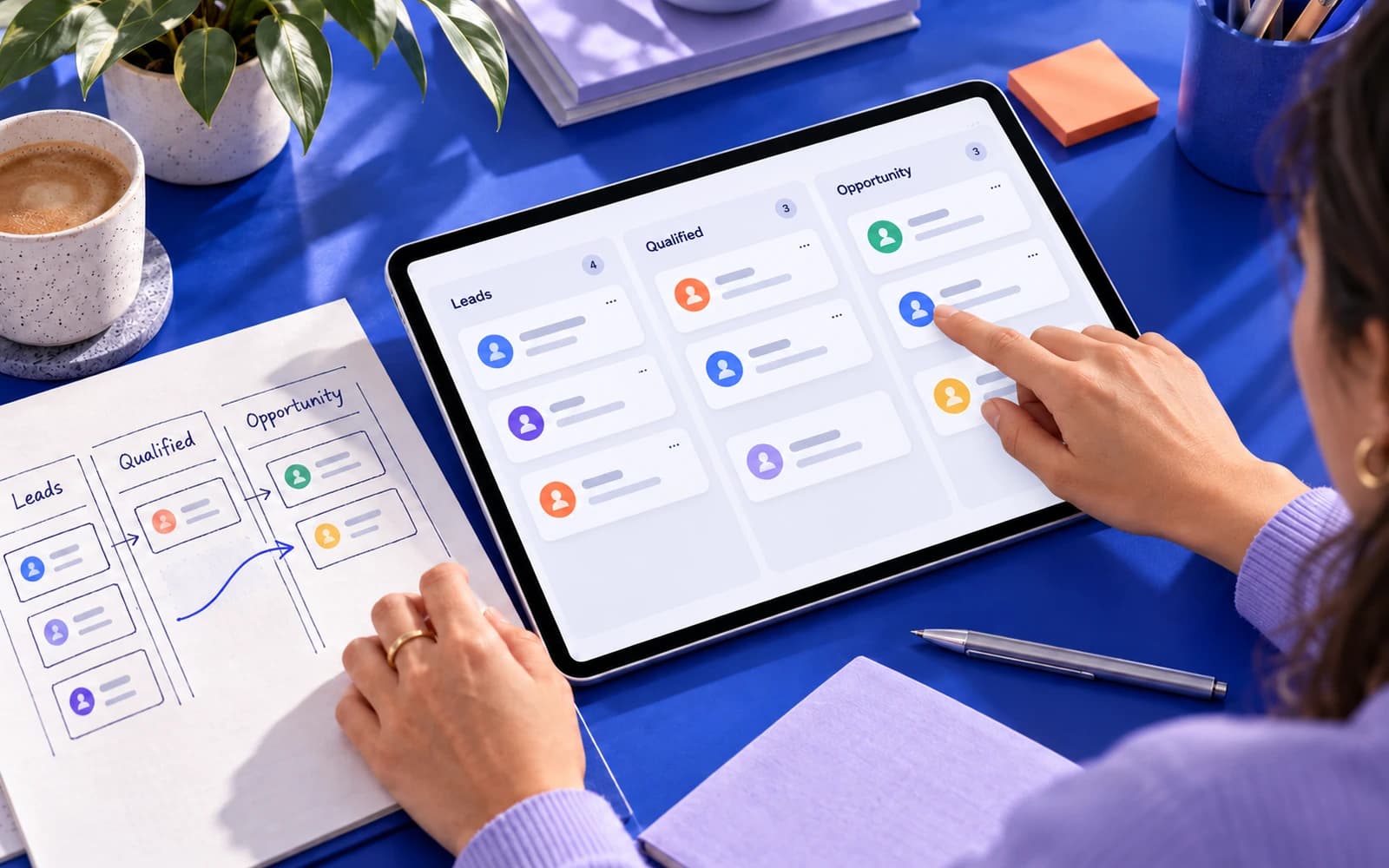 CRM and ERP8 min readWhen off-the-shelf CRMs can't keep up: when a business needs its own CRMHow to tell that amoCRM or Bitrix24 no longer fit, and what a custom CRM built around your processes gives: data in Kazakhstan, licences, links to 1C and Kaspi.
Shall we discuss your project?
We will tell you what it costs and how long it takes. The price is fixed in the contract.