
When a landing page cannot keep up: leads get lost and processes fall into chaos
A landing page is a great start, but as a company grows it becomes a bottleneck: leads get lost, statuses live in WhatsApp, growth hits headcount. When to move on.
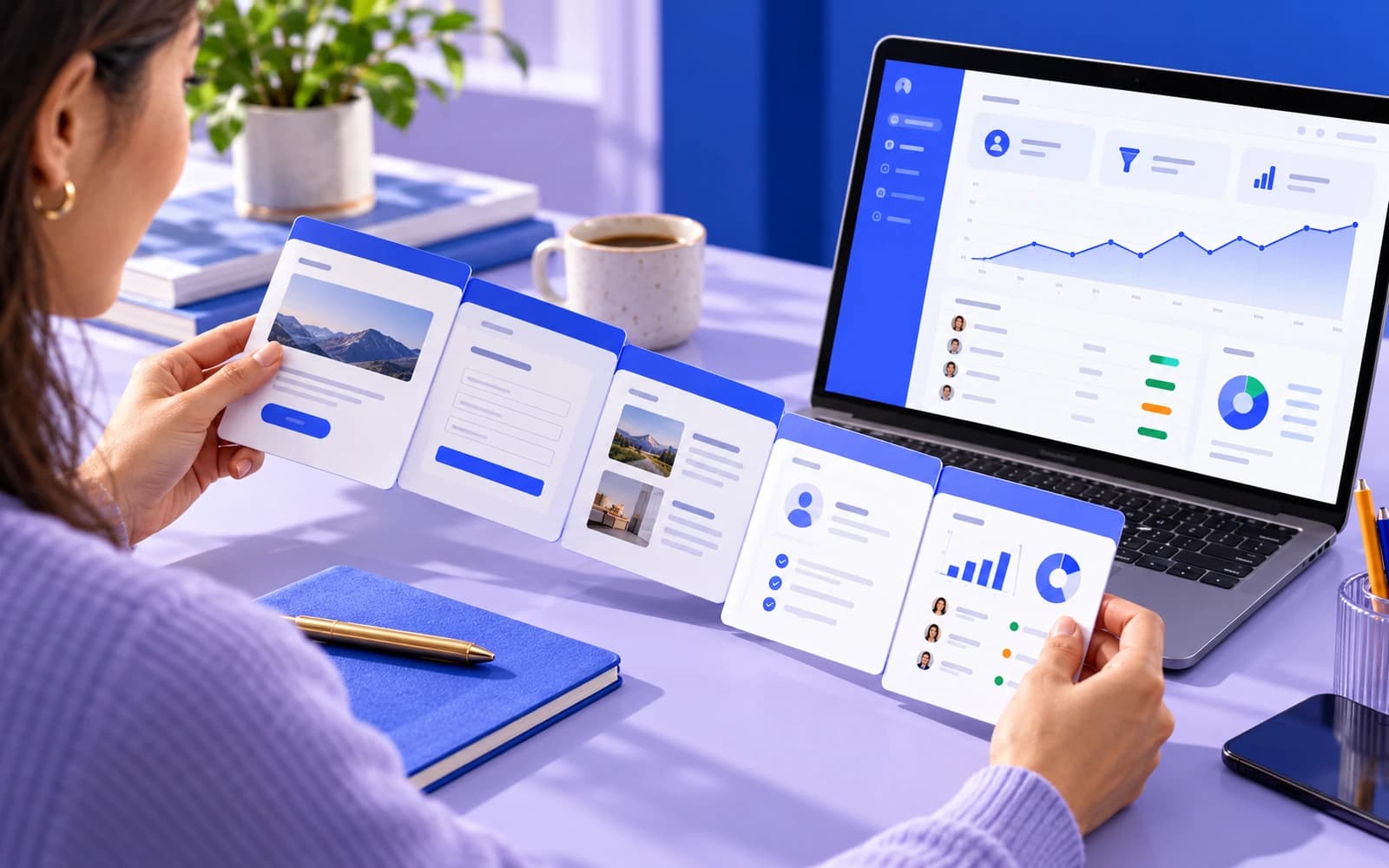
A landing page is the right first step. It is fast, affordable and good enough to test demand. At the start of a business, a single page with a request form does its job: it collects contacts, brings in the first customers and lets you test your positioning without a big investment.
The problems start later. The business has grown, there are more customers, the processes have become more complex, but the landing page has stayed the same. And what worked at the start begins to hold back growth.
Below: what a landing page that has stopped keeping up looks like, why companies put up with it for years, what goes behind it, how this looks in one example company and the signs that tell you it is time.
What it looks like when a landing page stops keeping up
It does not happen in a single day. The symptoms accumulate gradually, and many companies live with them for years, considering it normal.
Leads come in and get lost
The form on the landing page sends an email to a manager's inbox, and some customers write to the manager's personal number on WhatsApp. The manager is overloaded, the email slides down the list, the message gets buried among personal chats. The customer waits a day for a reply and goes to a competitor who answered within an hour. Nobody knows how many leads are lost this way, because there is no system to count them.
It is impossible to understand what is going on
Where did the customers come from? Which ads work? How many leads convert into deals? A landing page does not answer these questions. The analytics counter shows visits and conversion to a lead. Everything after that lives in managers' heads, in messenger chats and in Excel spreadsheets that everyone keeps in their own way.
The customer does not know what is happening with their order
After paying or placing an order, the customer disappears into an information vacuum. Order status: call a manager. An invoice, a completion act or a contract: ask on WhatsApp. Interaction history is stored nowhere. Every contact starts over, with the customer explaining everything from scratch. This is annoying and erodes loyalty.
Scaling runs up against headcount
To handle twice as many leads, you have to hire twice as many managers, because every step is manual. Take the request by hand, enter it in the spreadsheet by hand, issue the invoice by hand, check the payment in Kaspi or the bank statement by hand. Business growth is directly proportional to growth in staff costs.
There is no way to retain customers
A landing page is built for acquisition. It has no tools for working with the customers you already have. Repeat sales happen through mailings that are set up separately and are not tied to customer history. A loyalty programme stays an idea that never gets built, because it is unclear how.
Why many put up with this for years
The answer is simple: the landing page delivered results at the start, and it seems like the problem is not with it but with something else. Not enough traffic. A weak offer. Weak managers. Seasonality.
In reality, the tool has stopped matching the scale of the task. It is like keeping the books of a large company in a notebook. Technically possible. In practice, a source of constant errors and losses.
Another reason is the fear of the scale of change. "Rebuild everything" sounds expensive and slow. In practice, the move from a landing page to a web platform happens in steps: not a wholesale replacement all at once, but the gradual addition of tools where the pain is sharpest.
What replaces a landing page
Sometimes the next step is simply a proper multi-page site; our guide to a website for business covers the pages and features it needs. When the site has to do more than inform, the tools below come in.
A CRM as the first step
Before changing the site, you often need to put order into how leads are handled. An off-the-shelf CRM such as amoCRM or Bitrix24 connects to the form on the landing page and to WhatsApp, and starts recording every request, distributing requests among managers and tracking statuses. Leads stop getting lost. A funnel appears, and you can see at which stage customers drop off. CRM implementation starts from 800 000 ₸ with us; see our CRM for companies page.
A customer account
The next level is giving customers a self-service tool. Order status, purchase history, invoices, completion acts and electronic invoices from the ESF system, communication with the manager, all in one place. This reduces the load on managers, and the customer feels in control of the situation. When a client area is really needed and when it is too early is covered in our article on the customer portal.
Automating routine processes
Automatic invoicing, payment notifications, renewal reminders, event-triggered WhatsApp messages, passing orders and payments to 1C, issuing ESF e-invoices from the accounting system. All of this frees managers from operational routine and lets them focus on work that needs a human. We connect the site and CRM to accounting through 1C integration.
Analytics and reporting
When all data about customers, deals and communication is stored in a single system, you can make decisions based on numbers. Which acquisition channels work. Which managers close more deals. Where in the funnel the most customers are lost. This changes the quality of management decisions.
When you need a full-fledged web platform
Not every company needs a complex platform. For many, a landing page with a CRM and basic automation is enough. But there are scenarios where you cannot get by without your own development:
- A marketplace or aggregator: multiple sellers or providers, complex matching logic.
- A SaaS product: your business is software by subscription.
- An educational platform: courses, tests, progress tracking, certificates, student accounts.
- A B2B portal: major clients, contract prices and stock from 1C, documents signed with a digital signature.
- Complex e-commerce: non-standard order logic, a configurator, wholesale pricing, integration with Kaspi and 1C.
In these cases, off-the-shelf solutions do not cover the task completely. You need development tailored to specific requirements. A web application built around your processes starts from 1 000 000 ₸ with us: we launch the first version in a few weeks, the price is fixed in the contract, and the code and access stay with you.
An example: what it looks like inside a company
Take a typical company that sells equipment to other businesses. Today it has a landing page with a form, a WhatsApp number on the site and 1C with the accountant. A request arrives in a manager's inbox or on WhatsApp, the manager clarifies details in the chat, asks the accountant to issue an invoice from 1C, forwards it to the customer, waits for payment, checks the bank statement and writes to the customer that the order is being packed. The accountant issues the ESF e-invoice separately, and a week later the customer asks where the completion act is.
After the step-by-step move, the picture is different. Requests from the form and from WhatsApp land in the CRM, each with an owner. The manager creates the invoice from the deal card; it is generated in 1C and goes to the customer as a link. A payment posted in 1C marks the deal as paid automatically, and the customer gets a WhatsApp message. The customer sees the invoice, the completion act and the e-invoice in their account. The manager sells instead of forwarding documents, and the head of the company sees the funnel and the workload without separate reports.
None of this requires tearing down the landing page: it stays as the shop window, and what changes is what happens after someone presses "Send".
How to tell it is time
Several signals that a landing page has exhausted its capabilities:
- managers spend more than half their time on operational routine instead of selling;
- customers complain they do not know their order status and write about it on WhatsApp;
- it is impossible to calculate real conversion and customer acquisition cost;
- revenue growth requires a proportional increase in headcount;
- competitors have launched customer accounts and apps and are luring away your audience.
If at least three of these five points describe you, it is time to start the conversation about the next step.
Where to start the move
The move does not have to be a big project. The order that works most often:
- Bring every lead source into one place. The site form, WhatsApp, Instagram, calls and Kaspi orders land in one CRM, and every lead has an owner and a status.
- Count where time is lost. For a week, write down which questions customers ask most often and which actions managers repeat by hand.
- Automate the most frequent manual step. Usually it is the invoice, the payment notification or passing the order to 1C.
- Decide whether you need a client area. If customers keep asking for status and documents, give them an account with the two or three most frequent answers.
- Update the site once the system behind it is clear. Then the new site plugs straight into the CRM and accounting instead of living on its own.
Each step delivers a result on its own, and you can plan the next one by looking at the numbers from the previous one. That way you do not pay for a big platform until you are sure you need it.
What we do on this topic
Short and to the point.
Do I need to completely redo the site, or can I improve the landing page?
It depends on the task. Often the right first step is not redoing the landing page but connecting a CRM and setting up lead handling. The landing page stays as the entry point, while the system behind it changes. A full rebuild is needed when the tasks of the company fundamentally outgrow the single-page format.
How much does it cost to move from a landing page to a site with a client area?
By our price list a website starts from 540 000 ₸, CRM implementation from 800 000 ₸, and a web platform with client accounts, automation and reports from 1 000 000 ₸. We name the exact price after reviewing the task and fix it in the contract.
Is an off-the-shelf CRM enough, or do I need custom development?
For many companies a configured amoCRM or Bitrix24 is enough. Custom development is needed when processes differ strongly from the standard ones, or when customising a ready-made solution costs about as much as your own system. We review this at the consultation.
How long does the move from a landing page to a platform take?
It happens in steps. Connecting a CRM and automating lead handling come first and go live fastest; a full platform with client accounts and integrations takes longer. We launch the first version in a few weeks, and each stage delivers a result on its own.
Read also
 Websites12 min readWebsite for business: builder or custom, what to include and design examplesBuilder or custom website, the pages and features a business site in Kazakhstan needs, design examples by industry, common mistakes and a launch checklist.
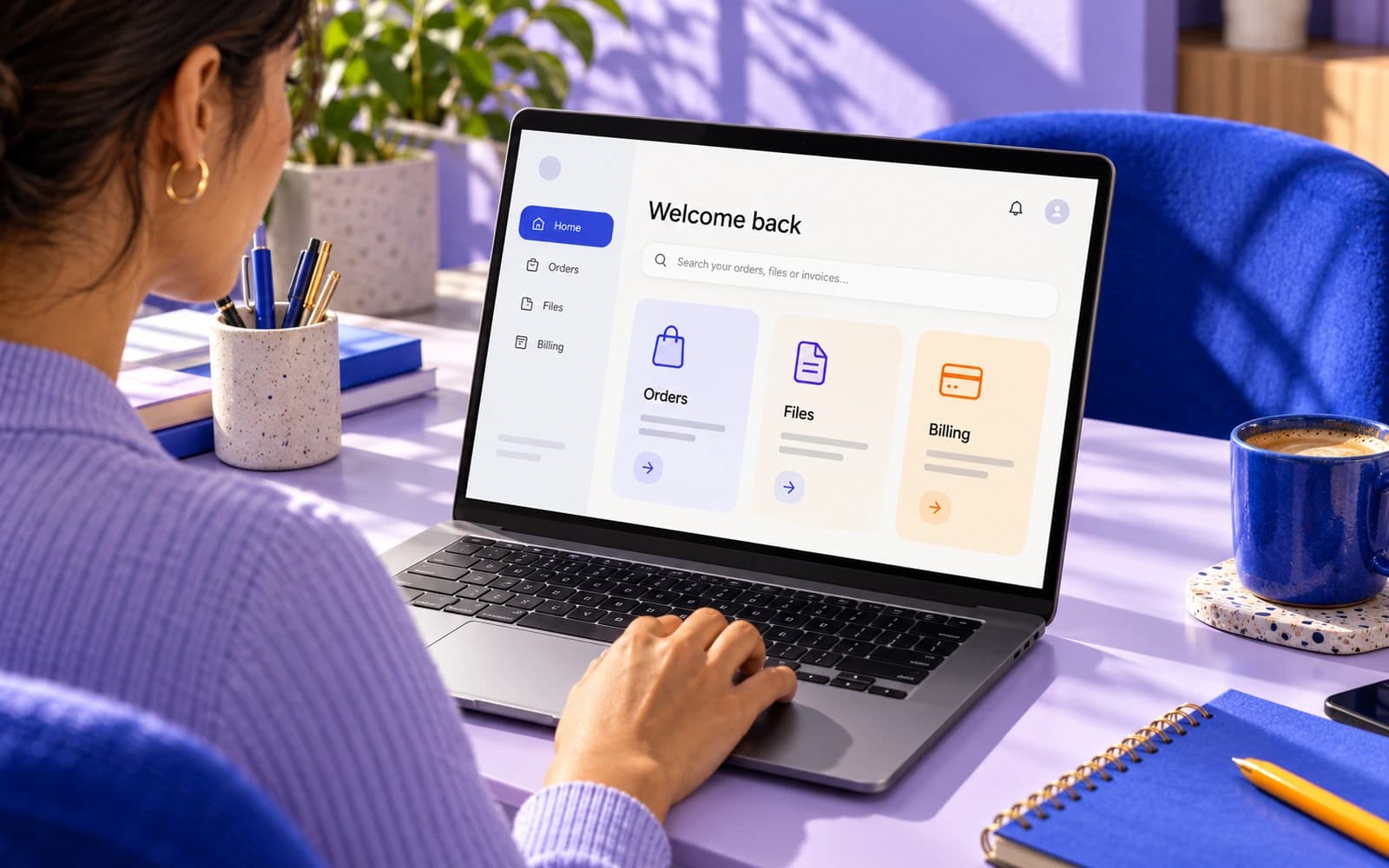 Websites12 min readCustomer portal: what it is, examples and when you need oneWhat a customer portal is, examples by industry, ready-made software or a custom build, 1C and CRM integration, personal data under Kazakhstan law, cost and phasing.
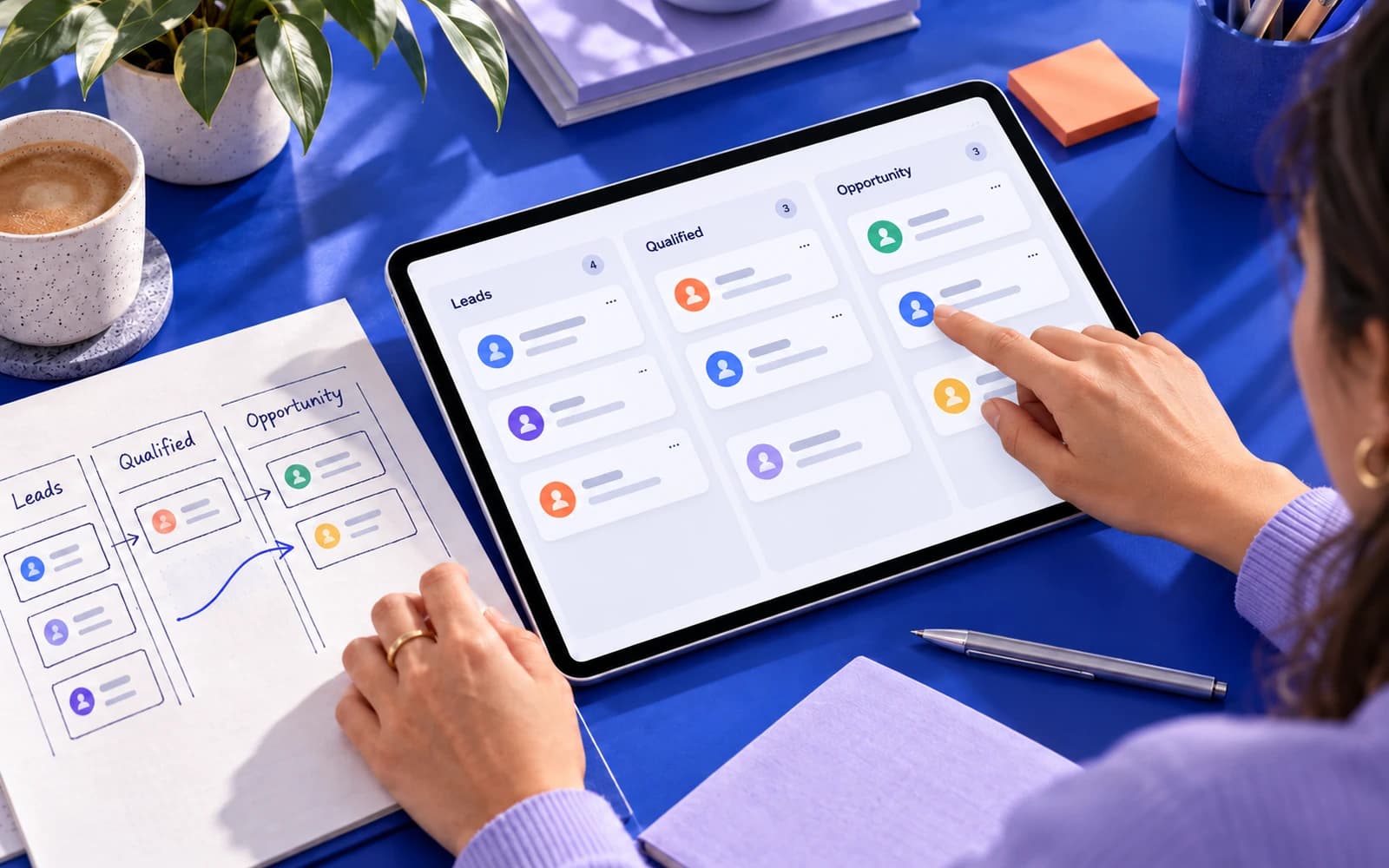 CRM and ERP8 min readWhen off-the-shelf CRMs can't keep up: when a business needs its own CRMHow to tell that amoCRM or Bitrix24 no longer fit, and what a custom CRM built around your processes gives: data in Kazakhstan, licences, links to 1C and Kaspi.
Shall we discuss your project?
We will tell you what it costs and how long it takes. The price is fixed in the contract.