
Digitalizing a private clinic: online booking, a patient app and integrations
How to automate a private clinic without chaos: online booking, WhatsApp reminders, a patient app, integration with your MIS and analytics by doctor.
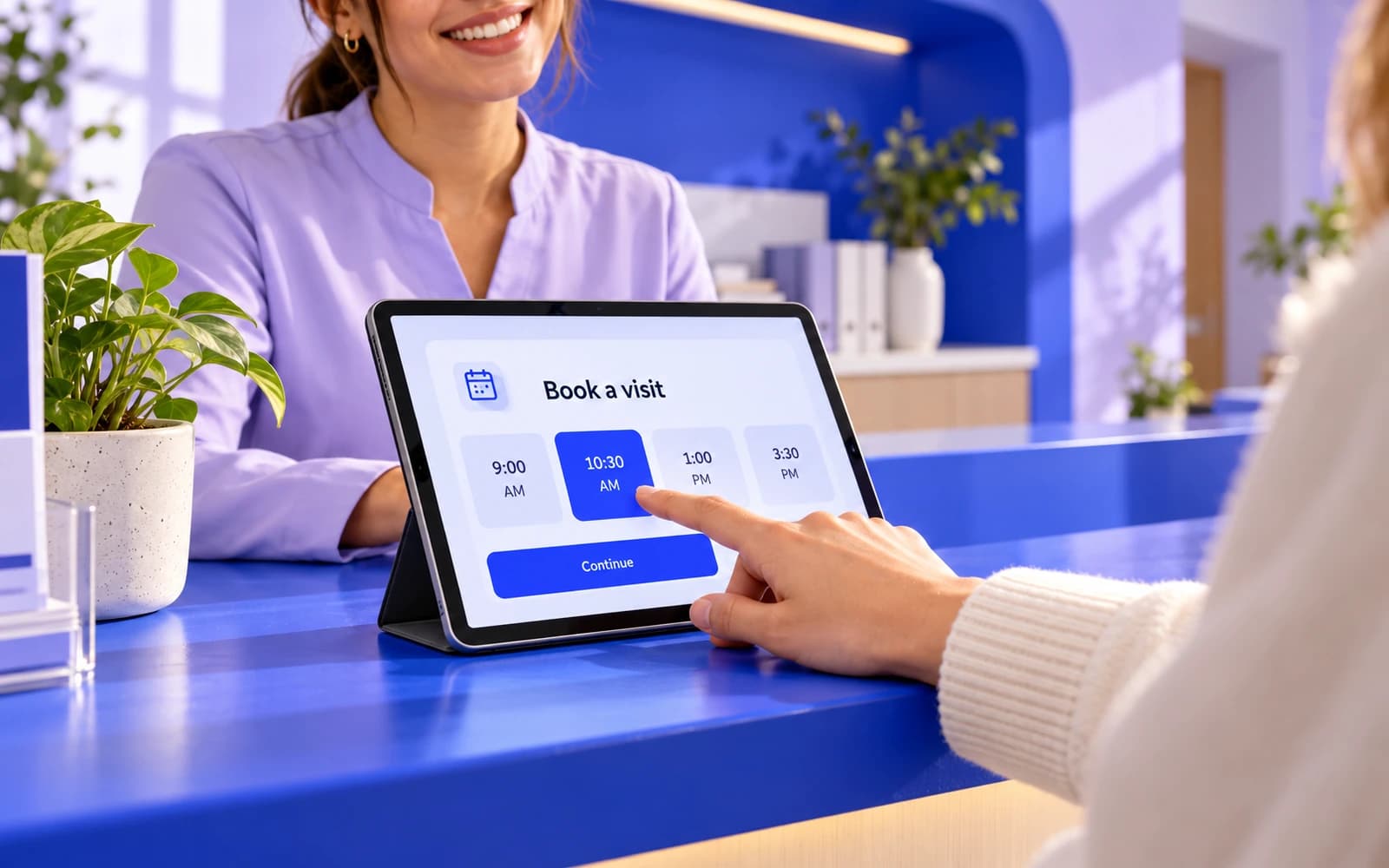
A private clinic's patient almost always comes from the internet. They look for a specialist on Google, 2GIS or Instagram, read reviews, compare, and want to book without a phone call, at any time, not just "from 9 to 6". If booking is by phone only, some requests are lost before the first contact: the line is busy at peak times, no one answers in the evening, and the person goes to a clinic with online booking. And inside the clinic, administrators juggle the schedule by hand, make reminder calls and lose contacts. Every no-show and every repeat visit that does not happen is direct money.
Let us break down what to automate in a clinic and in what order, how an MIS differs from a CRM, when an off-the-shelf product is enough and when customization is needed, what to build into a patient app and how to handle medical data in Kazakhstan. No hype about "AI medicine", only what really affects schedule occupancy and staff workload.
Where an unautomated clinic loses money
The set of problems repeats from one centre to the next, and almost every one costs money:
- Phone-only booking. Requests outside working hours and during peak load are lost. In effect, you pay for advertising that brings the patient in and then cannot accept them because the line is busy. An AI receptionist helps here: it answers those calls and books a free slot.
- No-shows. The patient booked and forgot. Without automatic reminders, no-shows eat a noticeable share of slots, and an empty doctor's chair has already been paid for.
- No unified picture. How many appointments there were, revenue by specialty, how loaded the doctors are, which channel the patient came from: the data is scattered, and the manager sees the situation after the fact.
- Patient data in different places. A logbook, Excel, the administrators' WhatsApp. Contacts get lost, and there is no one to invite back.
- No one systematically brings back repeat visits. A patient finished treatment and disappeared, even though they need a follow-up exam in six months. Without a CRM, no one tracks this.
Automation here pays off not through convenience but through a filled schedule and returning patients.
MIS and CRM: the difference and when to customize
Clinics run two classes of systems, and they are constantly confused. Understanding the difference saves money when choosing.
| Parameter | MIS (medical information system) | CRM |
|---|---|---|
| Area of responsibility | Schedule, electronic medical records, appointment accounting, the till, the medical side | The patient journey, request sources, repeat visits, marketing, loyalty |
| Main question | How do we treat and keep records? | How do we attract, retain and bring back? |
| Who works in it | Doctors, reception, accounting | Administrators, marketing, the manager |
Off-the-shelf solutions (cloud MIS and online booking services) cover the basics well: schedule, records, reminders. But the box has a ceiling. It is reached when a clinic develops its own scenarios:
- its own branded patient app;
- a non-standard loyalty program: memberships, family accounts, cashback;
- a single account for a network of branches with a shared database;
- integration with a specific lab or equipment that is not in the box;
- end-to-end advertising analytics: which channel the patient came from, whether they made it to the appointment, whether the ad paid off.
In these cases, you need to customize the existing system or build your own add-on that ties the MIS, website, telephony, WhatsApp and app into a single whole. This is not replacing the MIS; it is a layer on top of it that covers what the box cannot do.
Implementation order: where to start
Automating everything at once is expensive and risky. The order that delivers results fastest and pays off step by step:
- Online booking on the website and in messengers. The patient chooses a doctor, service and time themselves, and the booking lands in the schedule. This is the first thing that stops the loss of requests.
- Automatic reminders. A WhatsApp message a day before and a couple of hours before the visit, with "confirm", "reschedule" and "cancel" buttons. The cheapest way to reduce no-shows. This is the kind of bot WhatsApp automation delivers.
- A unified database and sources. You can see which channel the patient came from, whether they made it to the appointment, and whether they came back. Marketing becomes manageable.
- A patient app or personal account. Visit history, test results, booking and payment, push reminders and promotions.
- Analytics for the manager. Doctor workload, revenue by specialty, advertising effectiveness, repeat visits.
Each step is useful on its own, so the project does not turn into "a year-long rollout, after which it will work".
The patient app: what to build into it
A patient app is not one more icon for prestige; it is a tool for retention and for taking load off the front desk. What actually works in it:
| Feature | Effect |
|---|---|
| Online booking and rescheduling | Fewer calls to the administrator, a fuller schedule |
| Appointment history and doctor's notes | The patient does not lose documents and returns to the same clinic |
| Test results in the app | No need to come in or call for papers |
| Push reminders | Fewer no-shows without the administrator's work |
| Online payment and memberships | Convenience, and prepaid programs retain the patient |
| Loyalty program | Repeat visits |
| Video consultations (optional) | Online appointments and wider reach |
The key point: the app must be built into the processes, not live separately. Booking syncs with the MIS schedule, payment with the till, and test results are pulled from the lab. Otherwise it is a pretty shell, next to which the administrator still keeps the real schedule by hand.
Clinics usually take online payments by card through a bank's acquiring or through Kaspi by invoice or QR. Check with your accountant how to issue receipts for medical services.
The legal side is not optional
Health data is sensitive, and it must be handled more strictly than ordinary contacts. What is critical to build into the architecture from the very start:
- Storage in Kazakhstan. The personal data law requires storing personal data in a database located in the Republic of Kazakhstan (Article 12, paragraph 2). We choose the server, the backups and every service that patient data passes through with this in mind. A copy in a foreign service is already a cross-border transfer.
- Patient consent. A booking form collects personal data, so you need consent whose receipt you can prove. Our guide on personal data shows how to do this in a form.
- Medical confidentiality. Information about a patient's health is protected by medical confidentiality. So a WhatsApp reminder does not reveal the diagnosis or procedure: "We look forward to seeing you tomorrow at 10:00", not the name of the examination.
- Role-based access. The administrator sees the schedule and contacts, the doctor sees the medical side of their own patients, the manager sees analytics. Not "everyone sees everything".
- Access log. Secure storage and transmission of medical data, with a record of who opened a record and when.
Check the specific requirements for your clinic, including those for medical documentation and electronic records, with a lawyer: we build protection into the architecture, but we do not replace a legal review. All of this is built into the project from the start, not patched in at the end under the pressure of an inspection.
Common mistakes
- Online booking not tied to the schedule. The patient booked on the website but the slot is already taken: a double booking and a conflict. Booking must work with the real MIS schedule.
- An app on the side of the MIS. Without integration, the administrator runs two systems by hand. That is worse than one.
- Complicated loyalty. The patient does not understand confusing memberships and bonuses and does not use them.
- Ignoring advertising analytics. The clinic pours budget into ads and does not know which channel actually brings in paying patients.
- Skimping on data security. In medicine, this is not the line item to save on.
- A database on a foreign server. A convenient foreign booking service may store data abroad. Check this before you connect it.
How much it costs
We give an exact estimate after reviewing the clinic's processes and the options for integrating with your MIS. For planning, here are our starting prices:
| What | Price | What is included |
|---|---|---|
| Clinic website with a booking form | from 540 000 ₸ | Doctors, services, prices, appointment booking |
| Online booking system or patient account | from 1 000 000 ₸ | Booking by doctors' schedules, rescheduling, visit history |
| WhatsApp booking and reminder bot | from 420 000 ₸ | Free slots, booking, reminders with confirmation |
| AI receptionist for calls | from 540 000 ₸ | Answers calls, books, hands over to a person |
| iOS and Android patient app | from 1 000 000 ₸ | Booking, history, results, push, payment |
| CRM for a clinic | from 800 000 ₸ | Sources, repeat visits, tasks for administrators |
| MIS integration | from 270 000 ₸ | A standard link between two systems: schedule, bookings, payments |
An add-on and end-to-end analytics for a network of branches are estimated after a brief. A first version is out within a few weeks, the price is fixed in the contract before work starts, with a 6-month warranty, and the source code and accounts stay with the clinic. Everything we build for healthcare is collected on our page for clinics.
The bottom line
Digitalizing a clinic pays off not through buzzwords but through a filled schedule and returning patients. It is worth starting with online booking and automatic reminders, the fastest way to stop the losses. Next come a unified database and sources, a patient app and analytics for the manager. A ready-made MIS is enough for the basics; customization and a custom add-on are needed where the clinic develops its own scenarios, a network of branches or its own loyalty program. And all of this with a strict approach to medical data and storage in Kazakhstan.
What we do on this topic
Short and to the point.
Is a ready-made cloud booking service enough?
For a start, yes. Customization or your own system is needed when you develop your own app, a non-standard loyalty program, a network of branches with a shared database, or integration with specific labs and equipment. Check in advance where the service stores patient data.
Can a new app be integrated with our current MIS?
If the MIS has an API or a schedule export, yes. Booking, schedule, payment and results sync, and the patient does not need to repeat actions. Before starting, we check the integration options of the specific system; a standard integration starts from 270 000 ₸.
Will online booking reduce no-shows by itself?
Booking alone, no; the automatic reminders after it, yes. Online booking combined with WhatsApp reminders a day and a couple of hours ahead noticeably reduces the share of no-shows.
Does a clinic need a CRM if it has an MIS?
The MIS handles the medical side and record-keeping; the CRM handles acquisition, retention and bringing patients back. These are different tasks. Often you need a combination where the MIS stays the core and a CRM layer covers marketing and repeat visits.
Where is patient data stored?
In a database on a server in Kazakhstan, as the personal data law requires. Access is split by role, and reminders do not reveal the diagnosis. Check the requirements for medical documentation with the clinic's lawyer.
Will the rollout bring the clinic to a halt?
No, if you roll out in steps: booking and reminders first, then the account and analytics, without a hard switch of working processes. Before launch, administrators test booking through the new system themselves.
Read also
 Apps8 min readHow to increase customer retention: 9 practical ways that workHow to increase customer retention: nine practical ways, from the second visit to win-back messages, plus the tools for each stage and a simple checklist.
 CRM and ERP8 min readWhen off-the-shelf CRMs can't keep up: when a business needs its own CRMHow to tell that amoCRM or Bitrix24 no longer fit, and what a custom CRM built around your processes gives: data in Kazakhstan, licences, links to 1C and Kaspi.
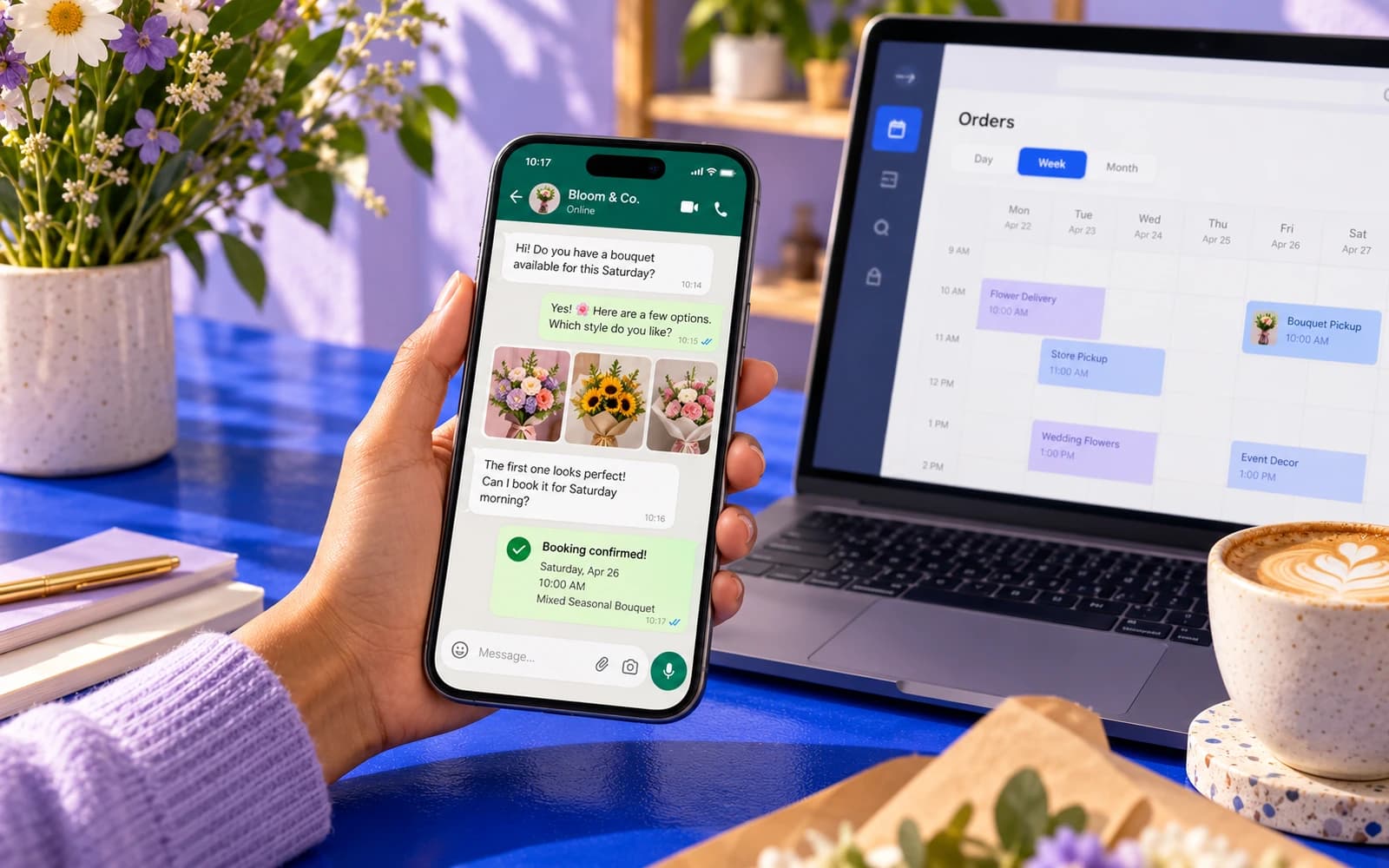 Automation14 min readWhatsApp automation for business: a practical guideWhatsApp automation for business: what to automate, opt-in and template rules, how Meta charges for messages from October 2026, tools and how a rollout runs.
Shall we discuss your project?
We will tell you what it costs and how long it takes. The price is fixed in the contract.