
Mobile app development cost in 2026: how much does it cost to build an app?
What drives the cost of a mobile app in Kazakhstan: app types, what a quote includes, running costs after launch and how to compare offers from developers.
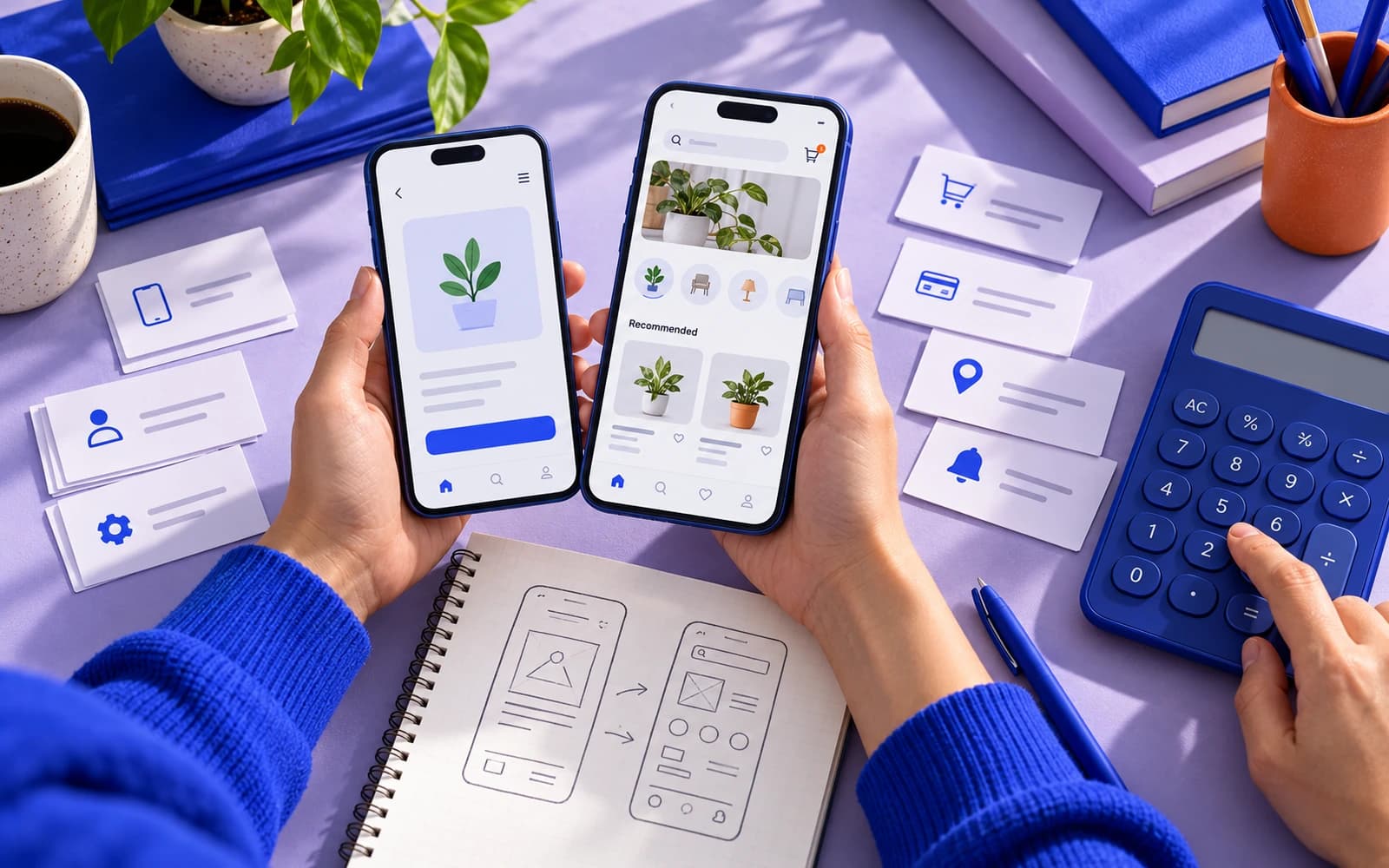
Mobile app development cost in 2026 depends less on the word "app" than on what the app actually does. A loyalty app with points and push notifications and a logistics platform with vehicle tracking and four user roles share one name, but their scope differs many times over. That is why three studios quote three different numbers for the same brief. Usually nobody is hiding anything: each one is simply estimating a different scope.
Below: what drives the price, the main types of apps and what they usually include, what an app costs with us, the running costs that appear after launch, and how to get an estimate you can actually compare with others.
At Pazl, an iOS and Android app on a ready platform starts from 1 000 000 ₸, a custom app built from scratch for your brand starts from 2 550 000 ₸, and a Telegram Mini App starts from 800 000 ₸. The price is fixed in the contract, with a six-month warranty.
What drives mobile app development cost
Every estimate is built from the same handful of variables. Once you know them, you can read any quote.
1. Platforms: iOS, Android or both
Most business apps need both stores: your customers carry iPhones as well as Android phones. A cross-platform build in Flutter or React Native shares one codebase between iOS and Android, so you pay for one codebase instead of two. Native Swift and Kotlin make sense for complex animation, heavy video work or specific device functions, and cost more because two separate apps are built. We compare the options in cross-platform vs native development.
2. Screens and user journeys
The number of distinct screens and flows matters more than the number of ideas. An app where customers sign in, collect points and see offers is one journey. Add ordering, booking and a staff app, and you have three products.
3. Backend, integrations and the admin panel
The part users see is often the smaller half of the bill. Behind it sit accounts, a database, push notifications and an admin panel your team uses to change texts, prices and offers. Each integration (a till, 1C, a CRM, payments, a booking calendar) is its own piece of work, and its price depends on how good that system's API or data exchange is. In Kazakhstan these are most often 1C, MoySklad, Kaspi and bank acquiring: card payments through Halyk ePay or payment through Kaspi (an invoice or a QR code). A loyalty app that talks to your till is a different project from a brochure app with a contact form.
4. Design
An app built on a proven set of components costs less than one where every screen, icon and animation is drawn from scratch. Custom design pays off when the app is your main sales channel. For an internal tool it rarely does.
5. User roles and permissions
A customer app has one role. A marketplace has at least three: buyers, sellers and admins. Every role means its own screens, rules and tests.
6. Interface languages
In Kazakhstan an app usually needs Kazakh and Russian. The second language is more than translated screens: there are store listings, notifications, emails and an admin panel with fields in two languages. Put this into the scope up front, not after launch.
7. Who builds it
Freelancers, remote teams and local studios price differently. The difference is not only quality. It is also who answers when something breaks six months after launch, who owns the code and whether there is a second person who knows the project.
App types and what they usually include
The app type sets the order of magnitude, but the scope in the brief changes the number more than the type does. Below is what a quote usually includes and what usually comes separately.
| App type | Usually included | Usually not included |
|---|---|---|
| Telegram Mini App or chatbot | Bot logic, one messenger, a basic admin panel | Store apps, CRM sync |
| Simple app for one platform | 5–8 screens, sign-in, push notifications, one backend | Second platform, custom design, integrations |
| Cross-platform app (iOS and Android) | Flutter or React Native, standard UI, API backend, store submission | Complex animation, hardware integrations, a second interface language |
| Shopping app with payments | Catalogue, cart, payments, order management, admin panel | Warehouse and 1C sync, loyalty |
| Loyalty app (retail, food service) | Points or cashback, till integration, push campaigns, analytics | Till hardware, SMS costs, store fees |
| B2B platform or internal tool | Roles, workflow automation, reporting, API integrations | Legacy data migration, security audit |
| AI-powered app | Language model integration, conversation logic, CRM hooks, admin controls | Model usage fees, fine-tuning |
| ERP or complex platform | Custom modules, interfaces for several roles, integrations, DevOps | Third-party licences, staff training |
All of these assume no legacy data migration. Servers, domains and third-party APIs (SMS, payments, maps) are paid separately.
What Pazl charges
Our starting prices are published on the service pages, and each one is a fixed price for an agreed first version:
| What you build | Starting price at Pazl |
|---|---|
| iOS and Android app on a ready platform | from 1 000 000 ₸ |
| Custom app built from scratch for your brand | from 2 550 000 ₸ |
| Loyalty app | from 1 000 000 ₸ |
| Telegram Mini App | from 800 000 ₸ |
| Web app or customer portal | from 1 000 000 ₸ |
| Chatbot for WhatsApp or Telegram | from 420 000 ₸ |
| AI agent | from 480 000 ₸ |
The final number depends on the screens, integrations and roles in your first version. We show how the three app options differ on the mobile app pricing page and what the work includes on the mobile app development page. Third-party fees and running costs (store accounts, acquiring, hosting, push services) are listed in the proposal, not discovered after launch.
How long it takes
Most studios work in phases. For a mid-size mobile app the phases look like this:
- Discovery and specification. Requirements, architecture, wireframes. This is where scope gets fixed; skipping it is the most common reason projects go over budget.
- Design. Screens, components, a clickable prototype and review rounds.
- Development. Backend and app are built in parallel, and this is the longest phase.
- Testing. Real devices, slow networks, payment flows in test mode.
- Store submission. Both stores review every app; apps with payments, health data and apps for children get stricter checks.
A first release with one journey is faster. At Pazl we ship a first version within a few weeks once the scope, content and access are ready. Integrations, custom features and store reviews add time. The scope and price are fixed in the contract.
Hidden and running costs most budgets miss
The build is the one-off cost. An app then costs money every month.
- Store accounts. Apple's annual fee and Google's one-time registration fee are paid separately at the stores' own rates. Apple's organisation enrolment requires a D-U-N-S number, so open the accounts in the first week of the project, not in the week of launch. We register them in your company's name.
- Third-party services. SMS for sign-in codes, maps, analytics and push notifications are billed by usage. A loyalty app that sends a lot of SMS pays for every message; push notifications are usually far cheaper.
- Hosting and monitoring. Servers, databases, backups and error tracking.
- Personal data. If the app collects names, phone numbers and purchase history, the Law of the Republic of Kazakhstan On Personal Data and Their Protection requires storing them in a database located in Kazakhstan. That shapes the choice of server from day one. What else you need (consent, a policy) is covered in our personal data guide; check the details for your company with a lawyer.
- Updates. Apple and Google release new OS versions every year and raise their technical requirements. An app nobody maintains starts breaking.
- Support and small changes. Bug fixes after the warranty, new offers, a changed menu. Budget a monthly amount or agree a support plan; we describe a sensible set-up in product support after launch.
How to cut the budget without cutting quality
The cheapest hour is the one nobody has to work. Scope decides cost, not rates.
- Start with one journey. Ordering, loyalty or booking, not all three. The second journey is cheaper once you know which one customers use.
- Check whether you need an app at all. If customers open it less than once a month, a web app or a Telegram Mini App may do the job for a fraction of the price. See how to make an app for your business for how to decide.
- Build cross-platform unless a native feature really requires two codebases.
- Reuse proven modules for sign-in, payments, push notifications and the admin panel, and spend the budget on what makes your app different.
- Plan integrations early. An API that turns out to be missing halfway through the project is the most expensive surprise in app development. Find out before you start whether your 1C or till supports data exchange and who will set it up.
- Prepare content and accounts early. Late menus, photos and store accounts delay launches more often than code does.
Fixed price or time and materials?
Fixed price works when the scope is written down before development. You know the number, the vendor carries the risk of underestimating, and changes go through a documented change request. It forces clarity up front.
Time and materials works when requirements are genuinely uncertain. You pay for the hours worked, which gives flexibility but moves the budget risk to you. Without a budget cap and regular reports, the final bill is hard to predict.
At Pazl we work at a fixed price: the scope and price are agreed in writing before development starts.
Common mistakes that inflate app budgets
- Comparing quotes for different scopes. A quote without an admin panel and a quote with one are not two prices for the same app.
- Leaving the admin panel for "later". The app goes live, and nobody can change prices or offers without a developer.
- Paying by the hour with no cap. That is how estimates grow.
- Ignoring store rules. An app that is only a website in a wrapper can be rejected, and a rejection adds time.
- No budget for version two. The first release shows what users actually need. If all the money went into version one, you cannot act on it.
Checklist: what to ask before you sign
- What exactly is included: design, backend, admin panel, integrations, store submission, warranty?
- Is the price fixed? How are changes priced?
- Who owns the code, the design files and the store accounts after the final payment?
- What does the warranty cover, and for how long?
- Which running costs will we pay each month, and to whom?
- Where will customer data be stored: on a server in Kazakhstan or abroad?
- Who reviews the code, and what happens if a key developer leaves?
- Can we open an app you have shipped, not only see screenshots?
What we have built
Two examples from our work show where the budget goes. For Hotu-As, a meat producer with its own retail chain, we built a loyalty app with cashback and an Apple Wallet card that works with ATOL tills and 1C 7.7. For a logistics company we built one system for the fleet, trips, documents and finance: separate interfaces for each role, GPS monitoring and a Telegram bot for drivers. In both cases most of the work was behind the screen: data, integrations and tools for staff.
What we do on this topic
Short and to the point.
How much does a simple mobile app cost to build?
At Pazl an iOS and Android app on a ready platform starts from 1 000 000 ₸, and a custom app built from scratch starts from 2 550 000 ₸. The final number depends on screens, roles and integrations, and we fix it in the contract.
What is the biggest factor in app development cost?
Scope: the number of journeys, roles and integrations. The choice between iOS, Android and both matters less than people expect, because most business apps are built cross-platform from one codebase.
How much does an app cost to run after launch?
Plan for store fees, hosting, third-party services billed by usage and a budget for updates and small changes. The amount depends on your users and integrations; a good proposal lists these costs before you sign.
Is a cheaper app from a freelancer a good idea?
It can be for a small, well-defined app. The risks are a single point of failure, no second reviewer and unclear ownership of the code and accounts. Whoever you hire, get the scope, the price and the ownership in writing.
Why do app quotes differ so much?
Because vendors estimate different things: one assumes a template and no admin panel, another includes custom design, integrations, testing on real devices and support. Ask each vendor what is included and what is not.
Should I build a web app first to save money?
Often, yes: a web app runs on every phone without store review, and the same backend can later power a mobile app. A store app is worth it when push notifications, offline use, the camera or a wallet card are part of the core journey.
Read also
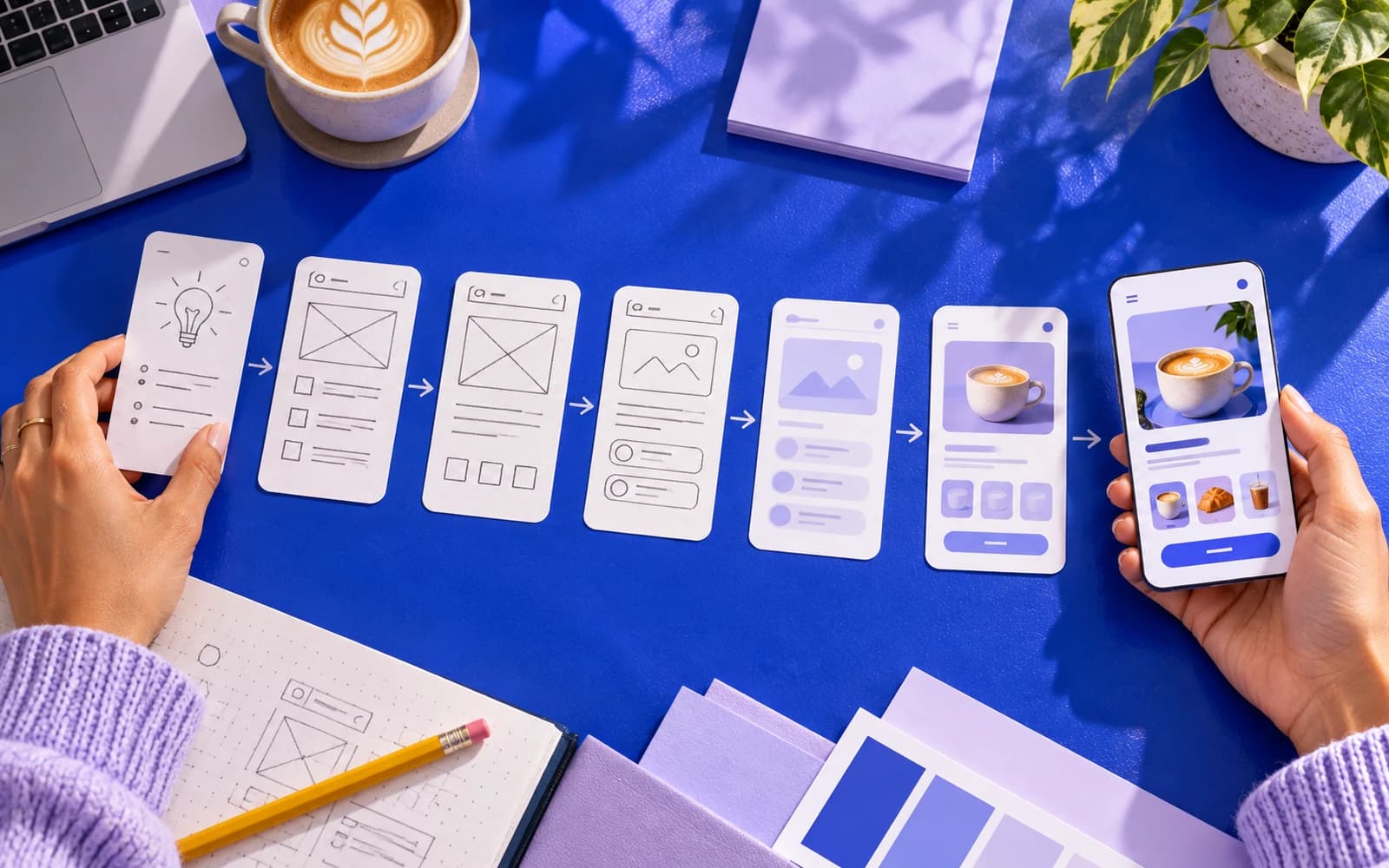 Apps10 min readHow to make an app for my business: a 7-step guide for 2026Do you need an app at all, which business apps pay off, the seven steps from goal to launch, what drives the budget and how to choose a developer in Kazakhstan.
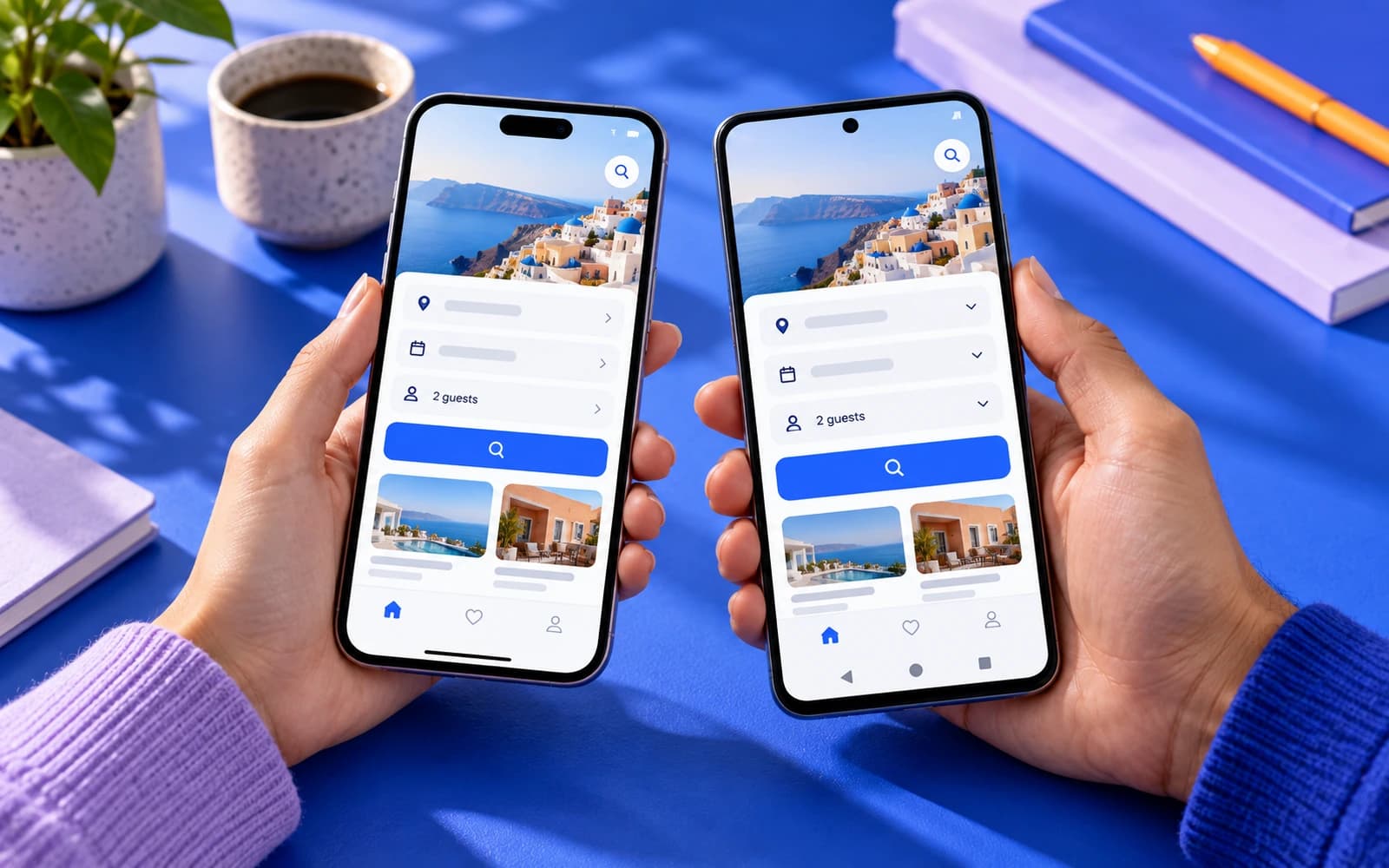 Apps8 min readCross-platform vs. native: what to choose and not regretHow cross-platform development in Flutter differs from native Swift and Kotlin, when each option is justified, and how not to overpay for technology you do not need.
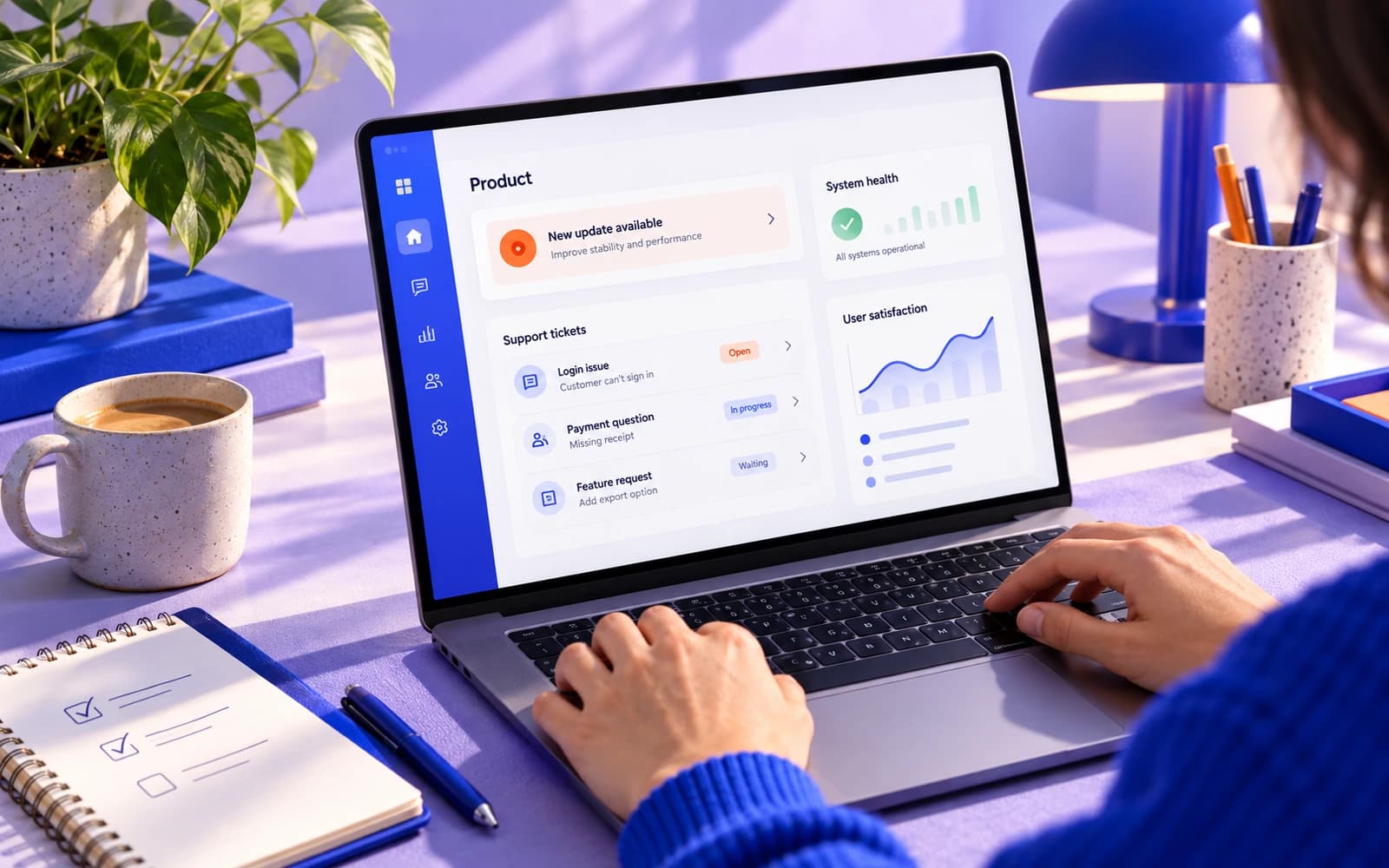 How we work8 min readLaunching is only the beginning: why product support matters more than it seemsMost companies treat product support as a cost line. We explain why it is an investment, what happens to an app or a website without it and how to plan it properly.
Shall we discuss your project?
We will tell you what it costs and how long it takes. The price is fixed in the contract.