
Customer loyalty app or digital loyalty card: which one your business needs
A digital loyalty card in Apple Wallet or Google Wallet, or your own loyalty app? What each can do, where each falls short and how to pick the right one.
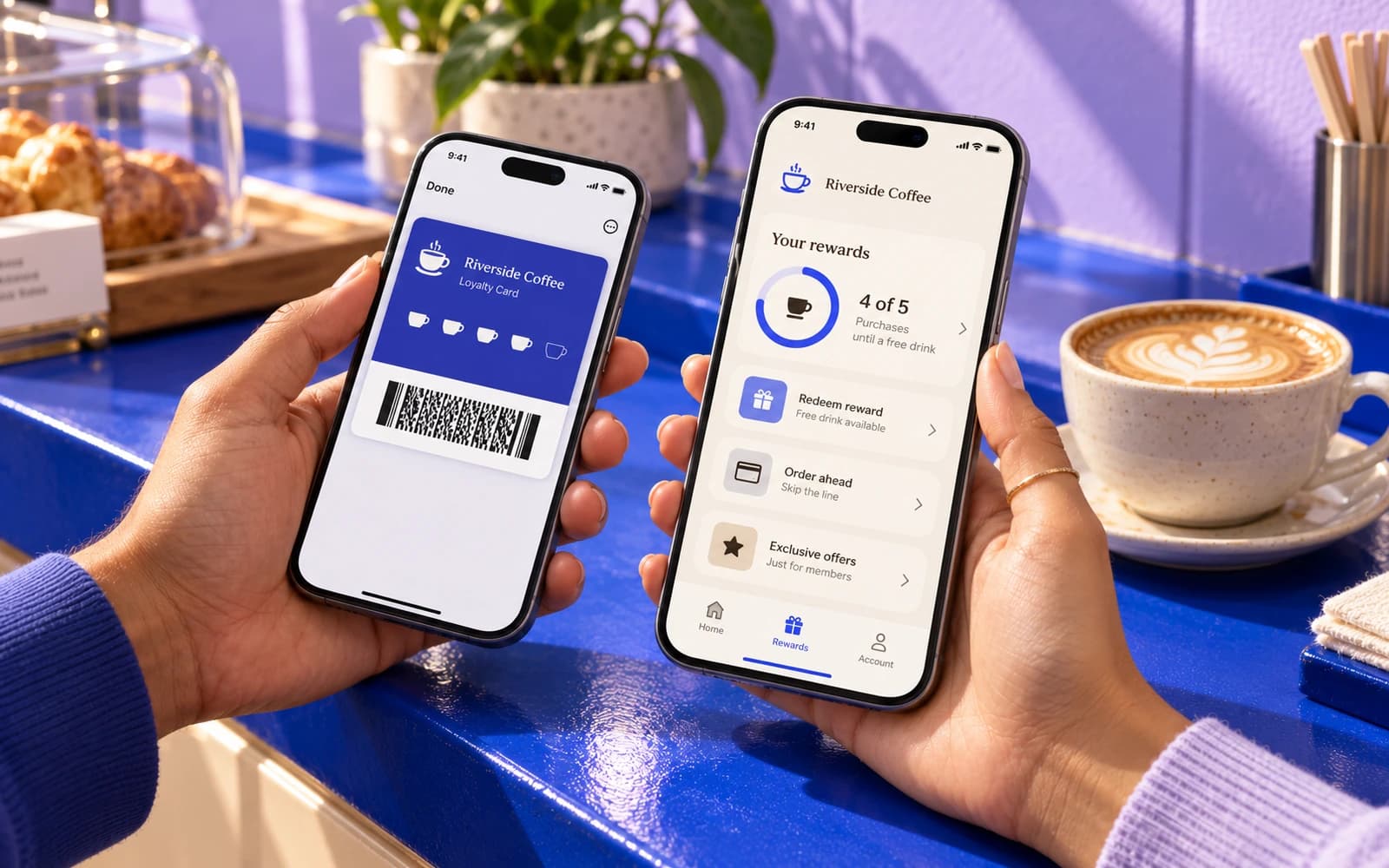
If you want to replace a paper stamp card, you have two digital options: a digital loyalty card that lives in Apple Wallet or Google Wallet, or a customer loyalty app with your brand in the App Store and Google Play. Both remove the "I left my card at home" problem. They differ in everything else.
The short answer: a digital loyalty card is enough when your programme is simple (stamps or points, one reward, one or a few locations) and you want customers to join in seconds without installing anything. A customer loyalty app is worth it when loyalty is only part of the job: you want people to order, book or pay, run tiers, packs or memberships, send targeted offers and see who has stopped coming. Many businesses end up with both: an app, with a card in the phone's wallet that opens it.
In Kazakhstan, shoppers are already used to earning bonuses on purchases, Kaspi bonuses being the familiar example, so the idea of "bonuses on every receipt" needs little explaining. The real question is where those bonuses live and what else the customer can do next to them. Below: how each option works, a side-by-side comparison, which one fits which business, and the mistakes to avoid.
What a digital loyalty card is
A digital loyalty card is a pass stored in the wallet app that is already on the customer's phone: Apple Wallet on iPhone, Google Wallet on Android. Both platforms have a dedicated format for loyalty and store cards.
How it works in practice:
- The customer scans a QR code at the till, taps a link in a WhatsApp message or on your website, and adds the card to their wallet. No app to install, no password.
- At the till, staff scan the card's code. The stamp or points are added in your loyalty system.
- The card on the phone updates: the new balance appears, and the platform can show a notification about the change.
What a wallet card does well:
- Joining takes seconds, which matters when there is a queue at the counter.
- It is always on the phone, next to the customer's bank cards and boarding passes.
- Balance and rewards stay current, so nobody argues about stamps.
Where it stops:
- It is a card, not a storefront. There is no menu, catalogue, cart, booking or payment.
- Communication is limited. Notifications are tied to changes on the card; you cannot run a full campaign calendar or personalised content through it.
- Design is a template. You set the logo, colours and fields, but the layout is the platform's.
- You need a back end. Someone has to issue the cards, keep the balances and connect the till. Usually that is a loyalty platform on a monthly subscription, or your own system.
What a customer loyalty app adds
A customer loyalty app is your own app. Bonuses are the reason people install it; the other features are the reason they keep it.
- Your brand, your rules. Stamps, points, cashback, tiers, class packs, memberships, referral rewards: whatever your programme needs, not what a platform supports.
- Ordering, booking and payment. A café app can take an order for a set pickup time and add the stamp on the way; see how this works on our page about restaurant and café apps.
- Targeted offers and push notifications. A birthday gift, a first-order bonus, a message to someone who has not visited for six weeks, sent to a segment rather than to everyone.
- Game mechanics that give people a reason to open the app between purchases.
- Customer data in your own systems: who comes back, how often, which promotions sell. If your till and accounting run on 1C, bonuses and purchase history can stay in step with it.
The trade-off: an app has to be downloaded, so fewer people join than with a wallet card, and it costs more to build. It pays off when the extra features bring visits and revenue a card cannot.
Digital loyalty card vs customer loyalty app
| Digital loyalty card (Apple Wallet, Google Wallet) | Customer loyalty app | |
|---|---|---|
| Joining | Seconds, no install | Download and sign up |
| What customers can do | Show the card, see the balance | Collect bonuses, order, book, pay, get offers |
| Loyalty mechanics | Stamps, points, simple rewards | Any: tiers, packs, memberships, referrals, games |
| Communication | Notifications about card changes | Push notifications to segments, in-app offers |
| Branding | Logo and colours on a template | Your own app and design |
| Customer data | What you collect at sign-up and at the till | Full history: visits, orders, preferences |
| Cost model | Monthly fee to a loyalty platform, or your own back end | One-off build plus support |
| Best for | One to a few locations, simple programme | Chains, frequent ordering or booking, rich programmes |
If you are still on paper and not ready for either, a loyalty card inside WhatsApp or Telegram is a third option; we compare it with paper and an app in 12 loyalty program ideas.
Which one fits your business
- One café, bakery or car wash with a stamp card. Start with a digital loyalty card. The goal is to stop losing stamps and start collecting contacts.
- Two to five locations with a bonus programme. A wallet card still works if the rules are simple. Move to an app when you want win-back offers, segments or order-ahead.
- A studio, gym or clinic that sells packs and memberships. An app, because customers need to see what is left on the pack and book the next session.
- A chain of shops or cafés with regulars. An app, with a wallet card that opens it, so the card works even for people who rarely open the app.
Can you have both?
Yes, and for chains it is often the best setup. The app carries the programme, the offers and the analytics; the wallet card is the quick way to show membership at the till.
That is how our project for Hotu-As, a meat processing plant with its own retail chain, is set up: an app with cashback and a bonus card, a card in Apple Wallet and a connection to ATOL tills and 1C 7.7 accounting. The old accounting system was not a blocker: bonuses are added through the till, and the customer sees the balance on the phone.
Mistakes to avoid
- Choosing the tool before the rule. Decide what you reward and when first. The tool should follow the programme, not the other way round.
- Building an app that only shows points. Customers delete it. Give them something useful to do in it: order, book, reorder the usual.
- Asking for too much at sign-up. A phone number is enough to start. Every extra field loses members at the till. And remember that a phone number and a name are personal data: collect them with consent and store them on a server in Kazakhstan.
- Forgetting the staff. If scanning takes longer than stamping a paper card at rush hour, staff will skip it.
- No plan for the data. A card or app that collects visits nobody looks at is a digital paper card. Decide which numbers you will check every month; see how to increase customer retention for the three that matter.
Checklist before you choose
- The programme rule fits in one sentence.
- You know how often a typical customer buys.
- You know whether you need ordering, booking or payment in the same place.
- You know which till, accounting or booking system the card or app must connect to: 1C, iiko, MoySklad or something of your own.
- Someone on your team will read the numbers every month.
- You have compared a year of platform fees with a one-off build plus support.
When a custom loyalty app makes sense
If you need a branded app, your own bonus rules or a connection to your till and customer database, we build loyalty apps for retail, cafés and studios: points or stamps, cashback, an Apple Wallet card, push offers and a till connection. A first version on a ready-made platform starts from 1 000 000 ₸; a fully custom branded app with its own logic starts from 2 550 000 ₸. What drives the price is broken down on how much a loyalty app costs.
The price is fixed in the contract before work starts, and the first version is out within a few weeks once the scope is agreed and till access is in place. You get a 6-month warranty, and the source code and accounts stay with you. If a standard wallet card service covers your case, we will say so.
What we do on this topic
Short and to the point.
What is a digital loyalty card?
A loyalty card stored in Apple Wallet or Google Wallet instead of plastic or paper. The customer adds it from a QR code or a link, staff scan it at the till, and the balance on the phone updates automatically.
Do customers need to download an app for a digital loyalty card?
No. The card lives in the wallet app that is already on the phone. That is its main advantage over a customer loyalty app, which has to be installed.
When is a customer loyalty app better than a wallet card?
When loyalty is combined with ordering, booking or payment, when you run tiers, packs or memberships, and when you want targeted offers and full customer data in your own systems. A first version starts from 1 000 000 ₸.
Can a loyalty app and a wallet card work together?
Yes. The app runs the programme and the wallet card shows membership at the till. That is what we built for Hotu-As: an app with cashback and a card in Apple Wallet.
Can I move from a paper card to a digital one without losing customers?
Run both for a while: accept existing paper stamps and transfer them when the customer joins digitally. Announce an end date for paper once most regulars have switched.
Read also
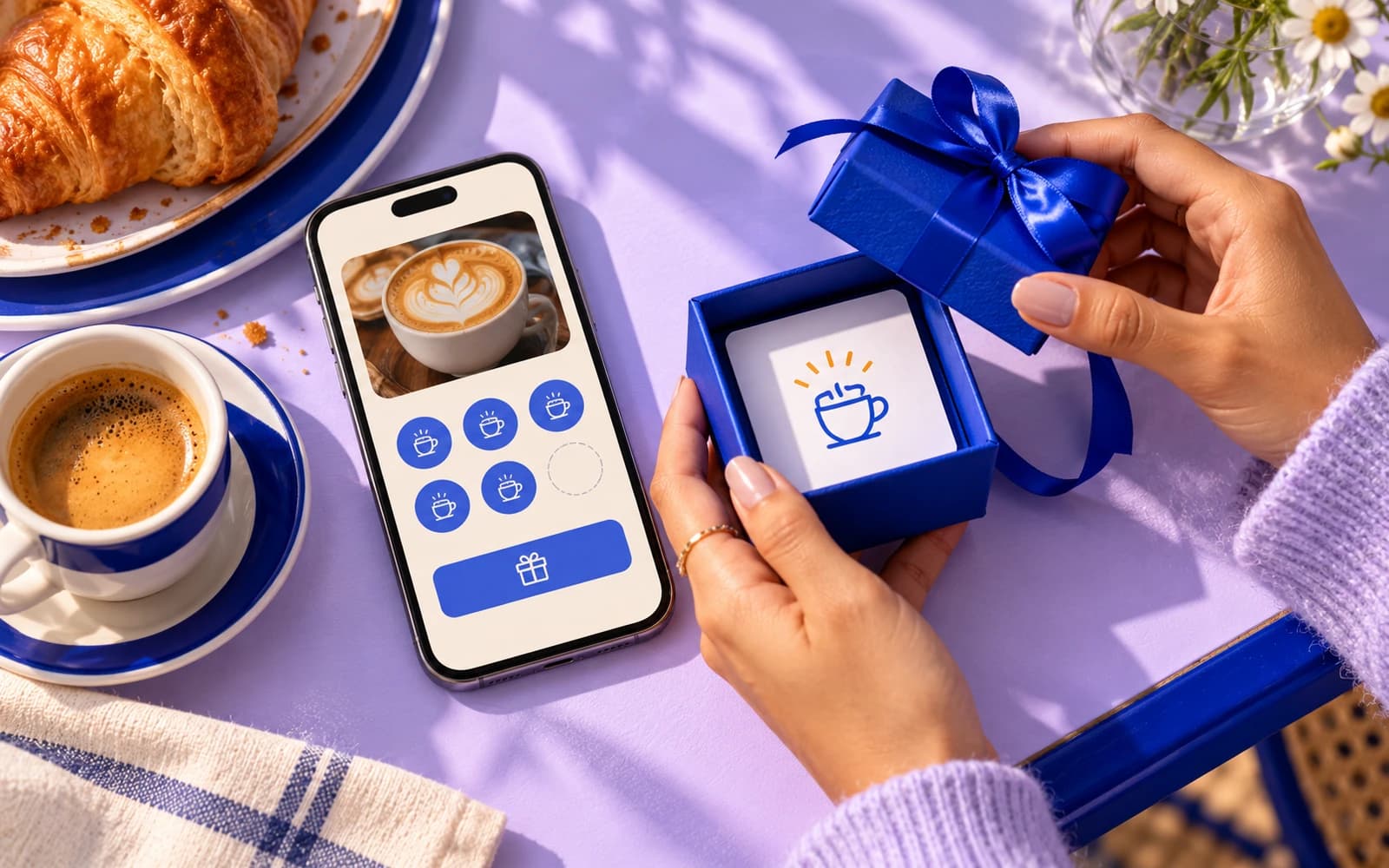 Apps12 min readLoyalty program ideas: 12 ways to bring customers back to cafés, salons and shopsLoyalty program ideas for restaurants, cafés, salons, studios and shops: 12 that work, the pitfall of each, which tool to run them on and a 30-day plan.
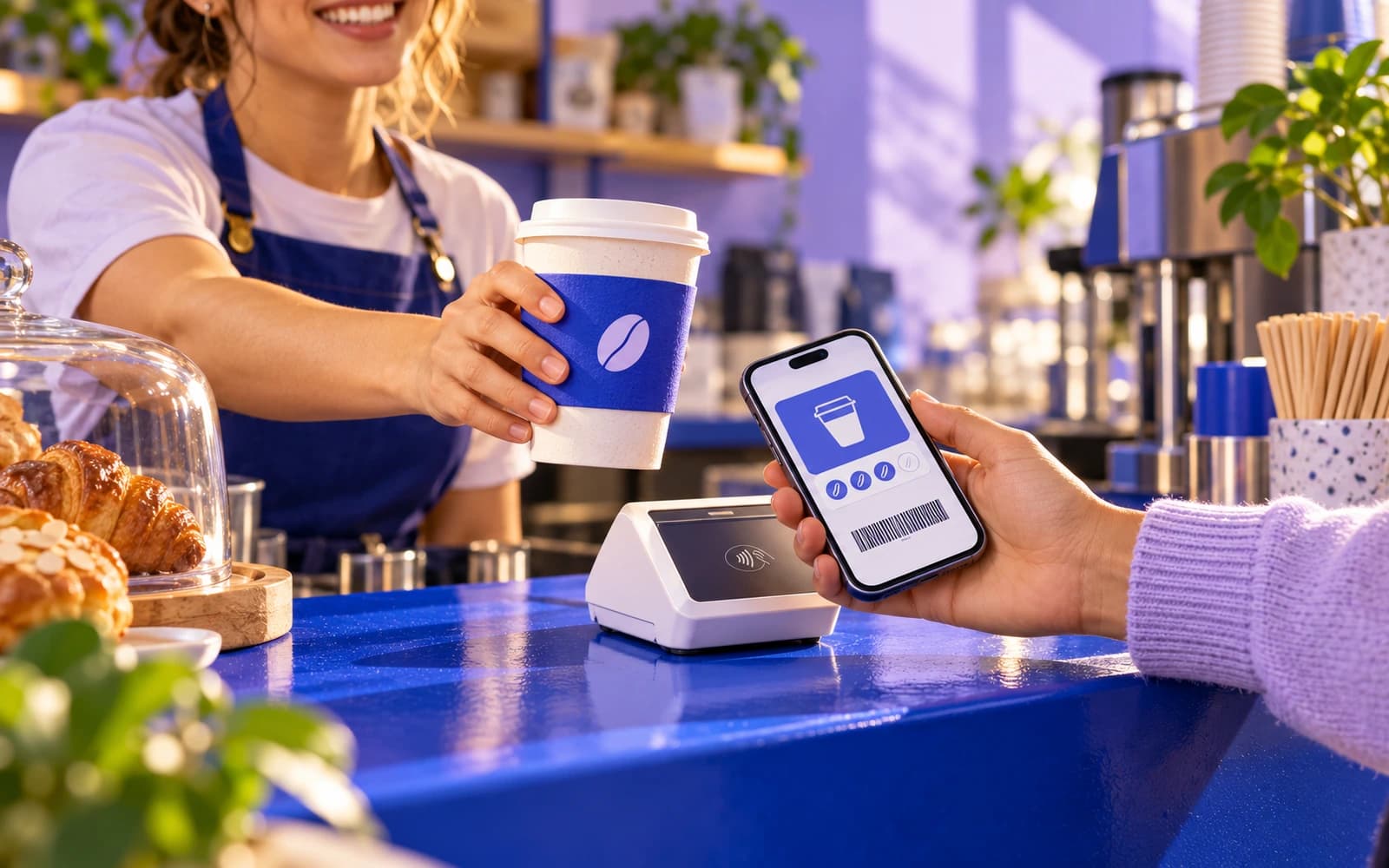 Apps8 min readHow to increase customer retention: 9 practical ways that workHow to increase customer retention: nine practical ways, from the second visit to win-back messages, plus the tools for each stage and a simple checklist.
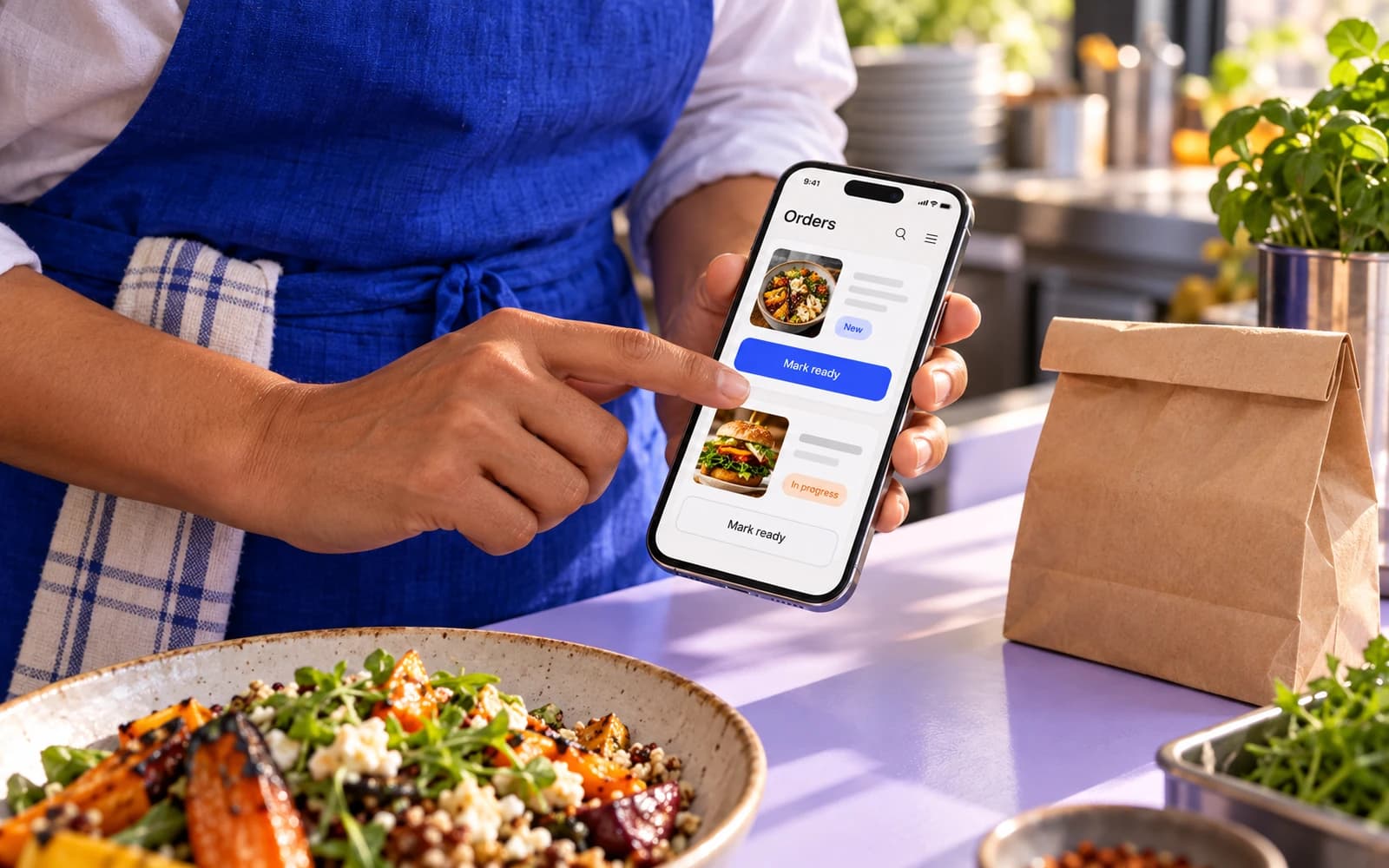 Industries14 min readApp for my restaurant: do you need one, what to build and what it costsDo you need an app for your restaurant, or is a website with ordering enough? Formats, launch features, iiko and r_keeper integration, cost and payback.
Shall we discuss your project?
We will tell you what it costs and how long it takes. The price is fixed in the contract.